In their words · Blue Cross incident-to change
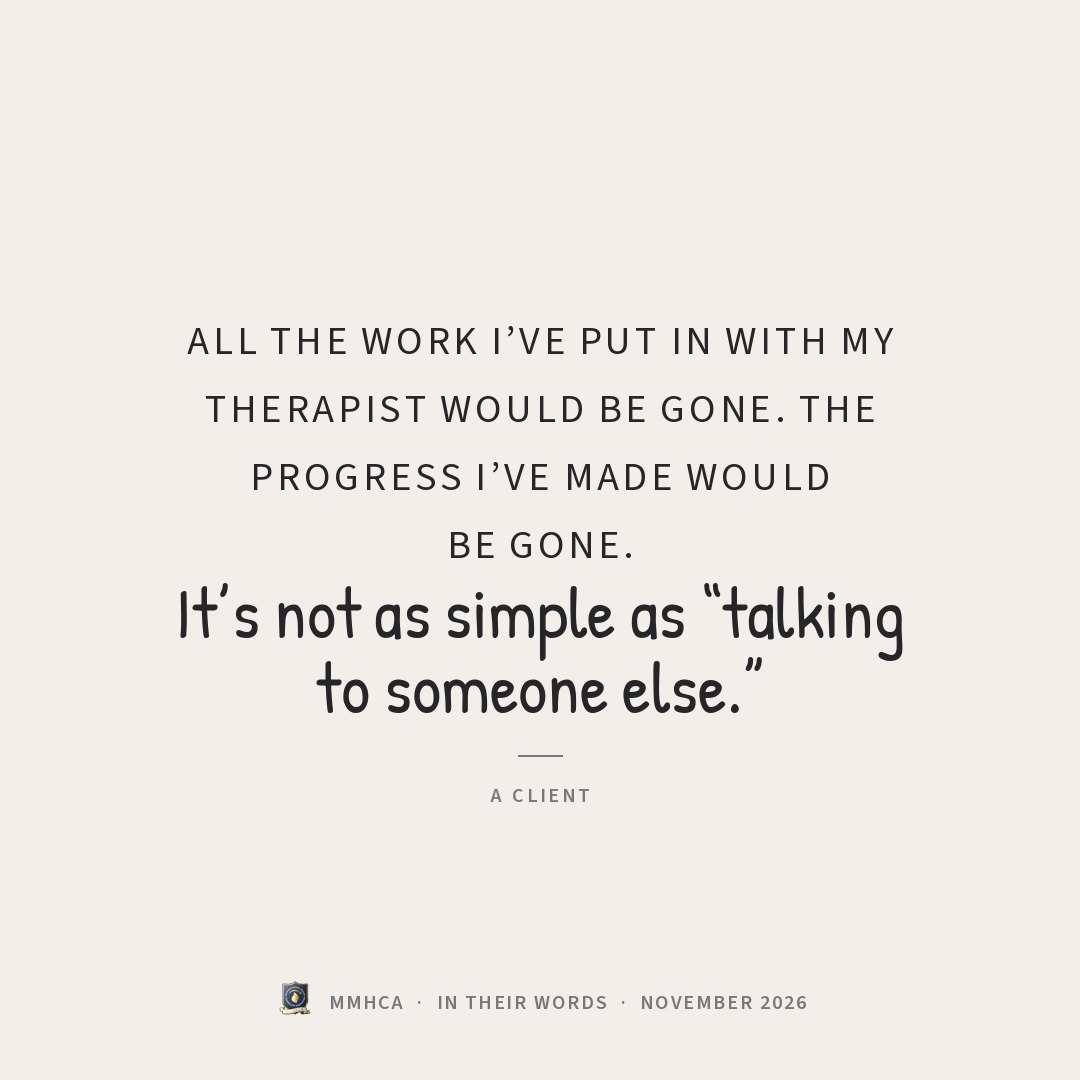
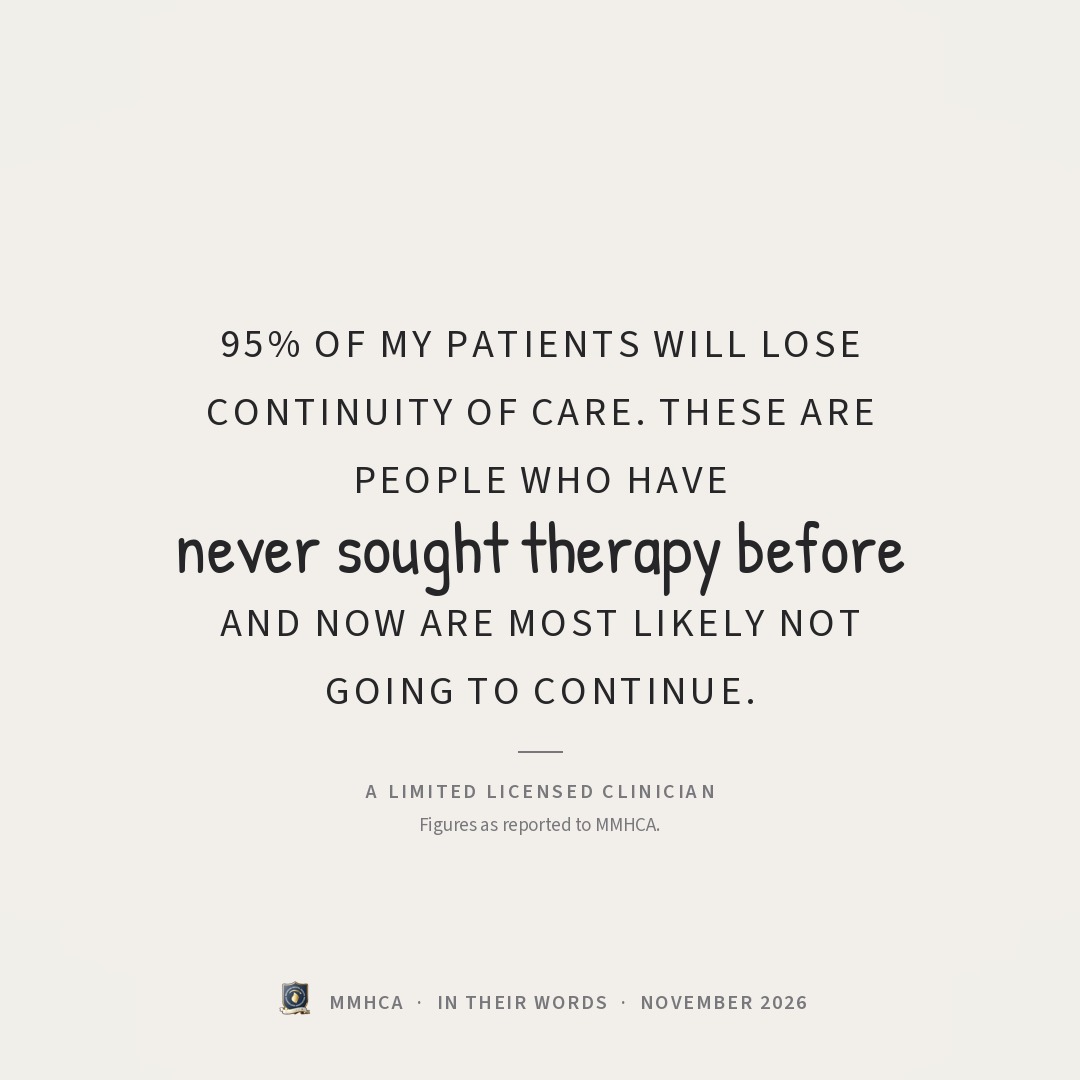
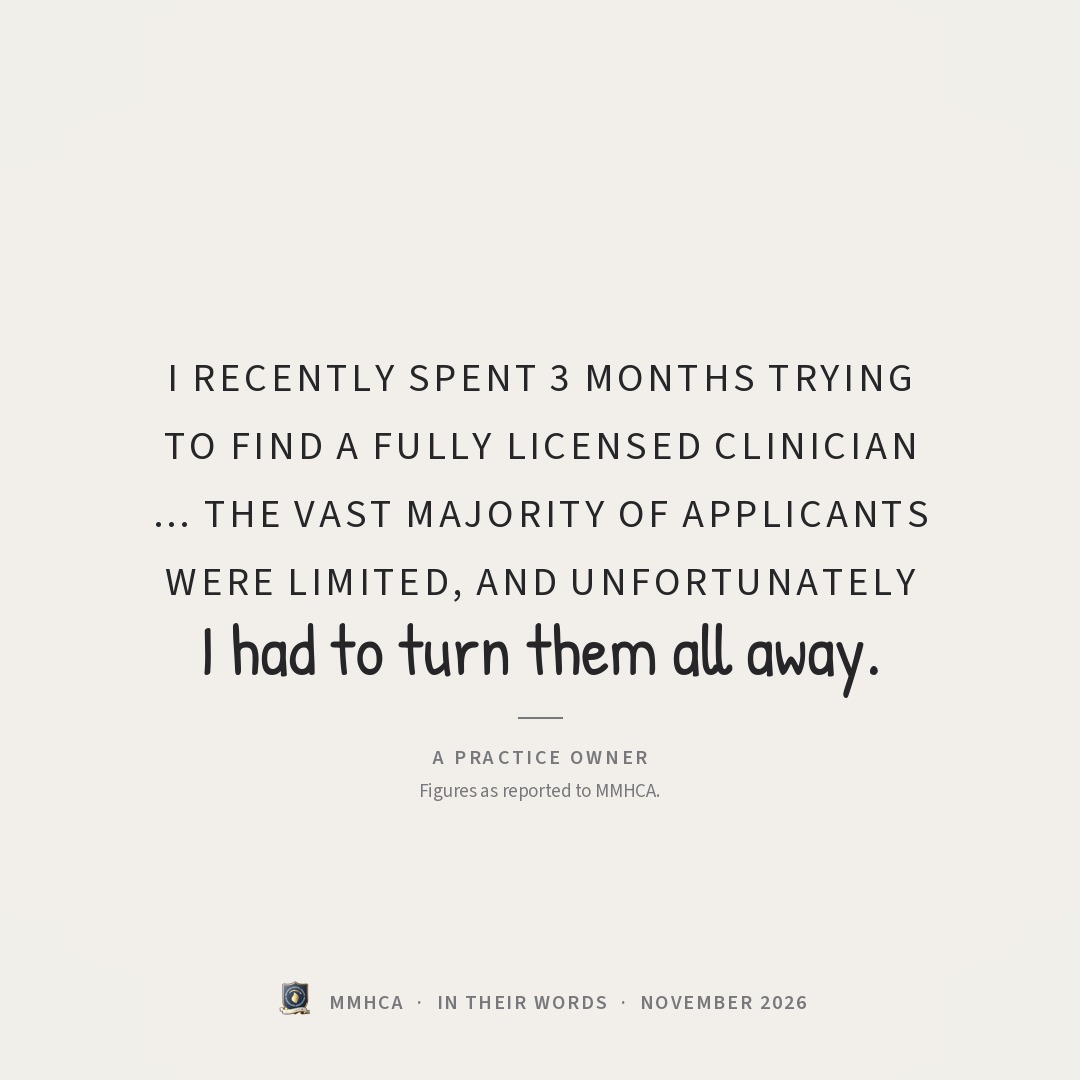
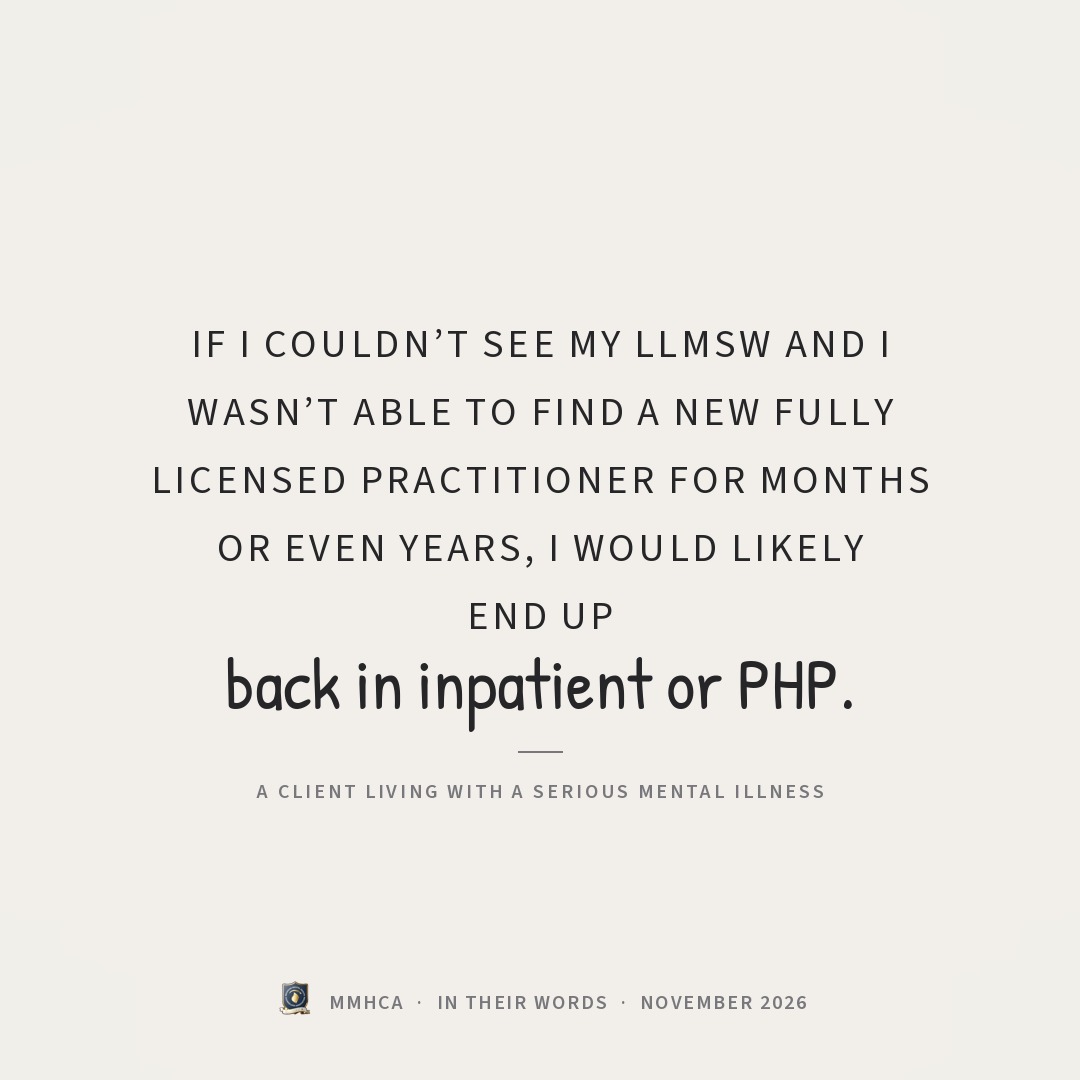
42 Michiganders on what the Blue Cross change will cost. Take a card. Share it.
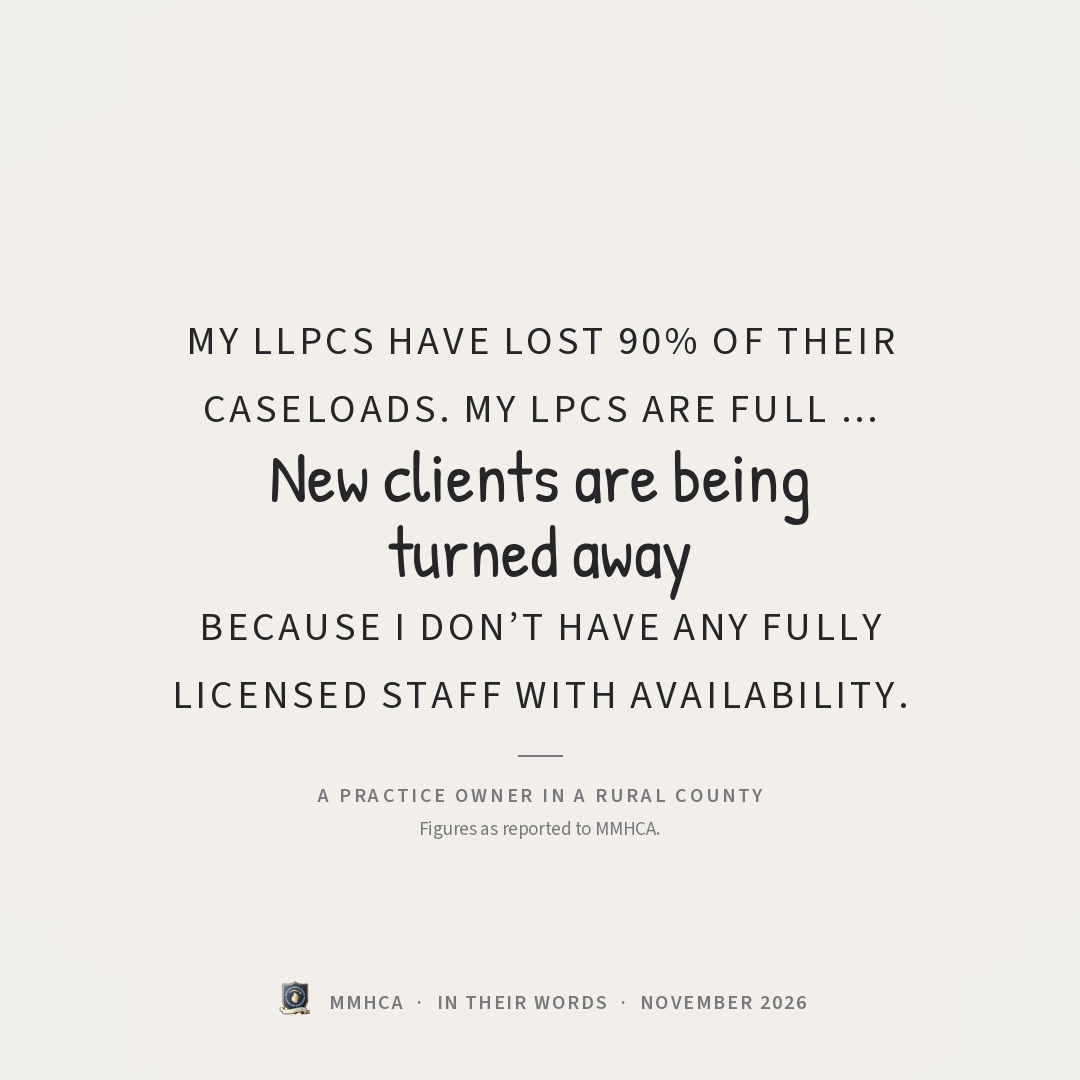
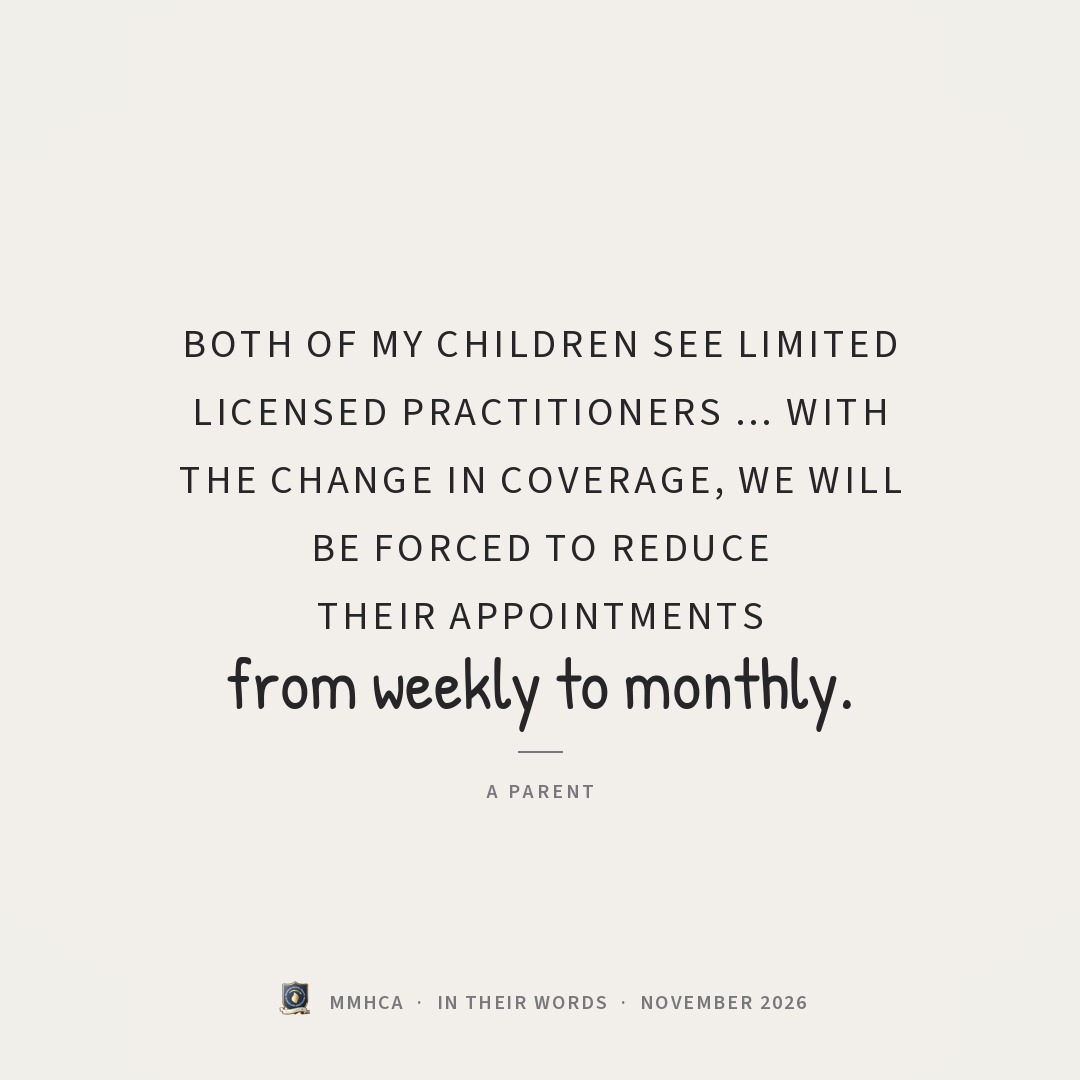
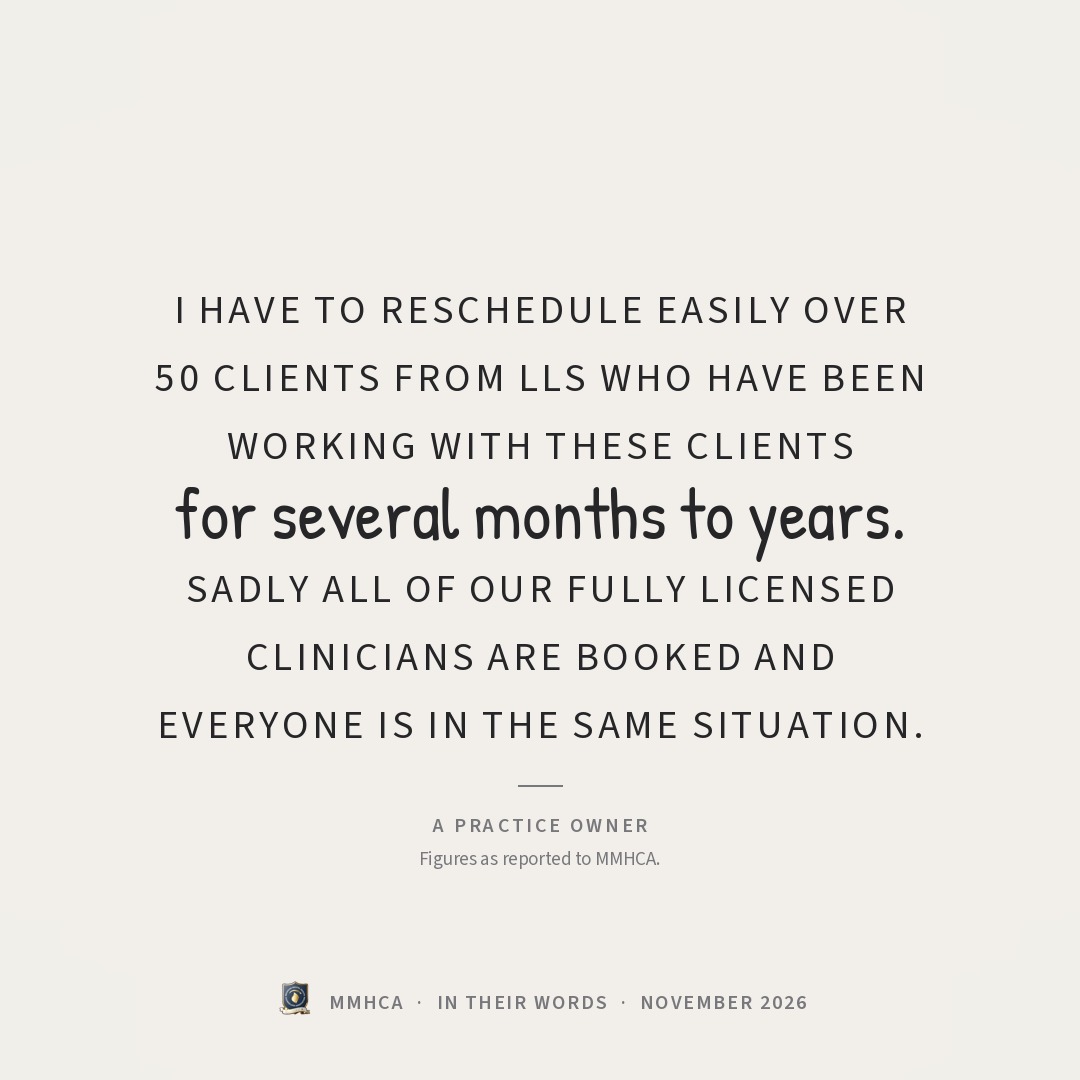
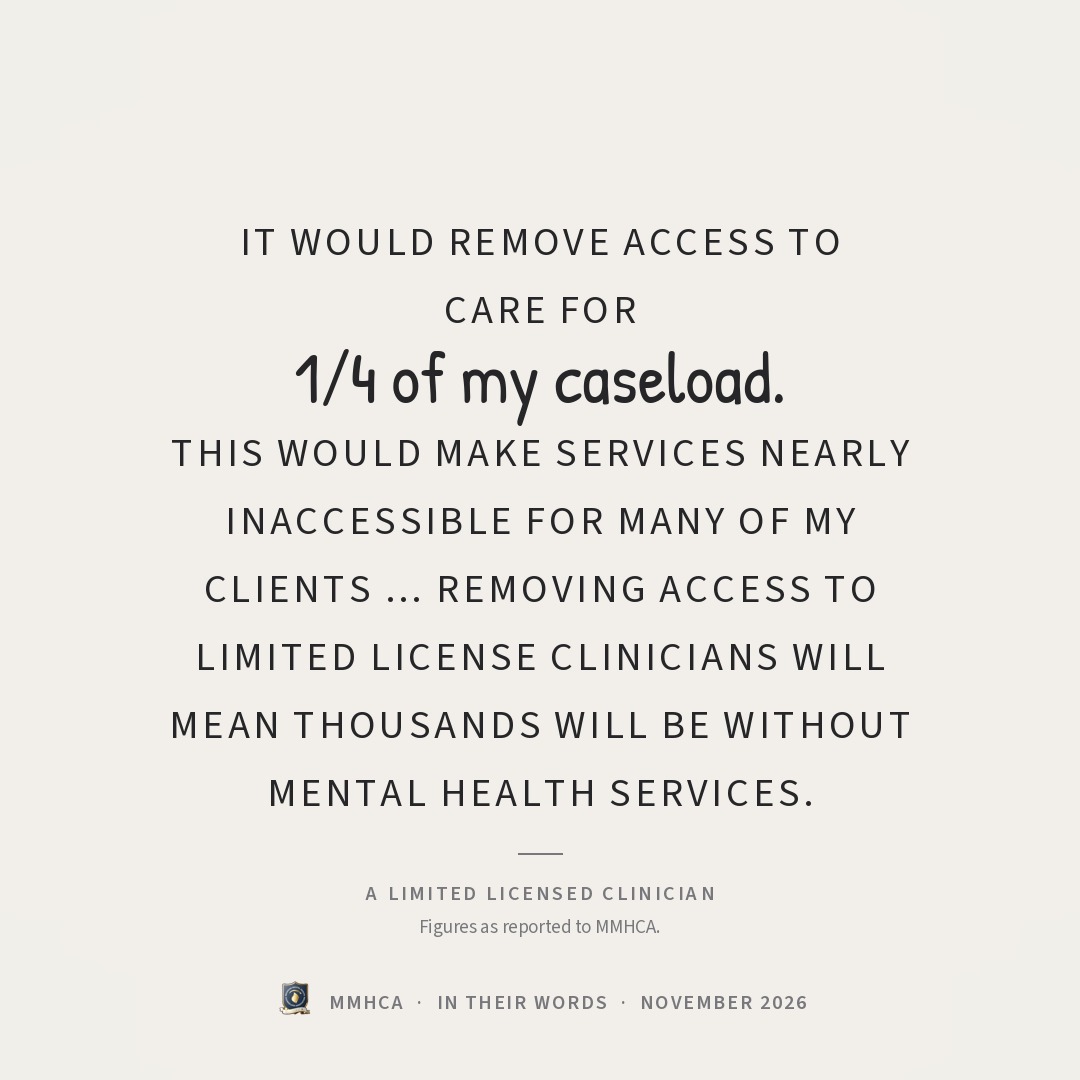
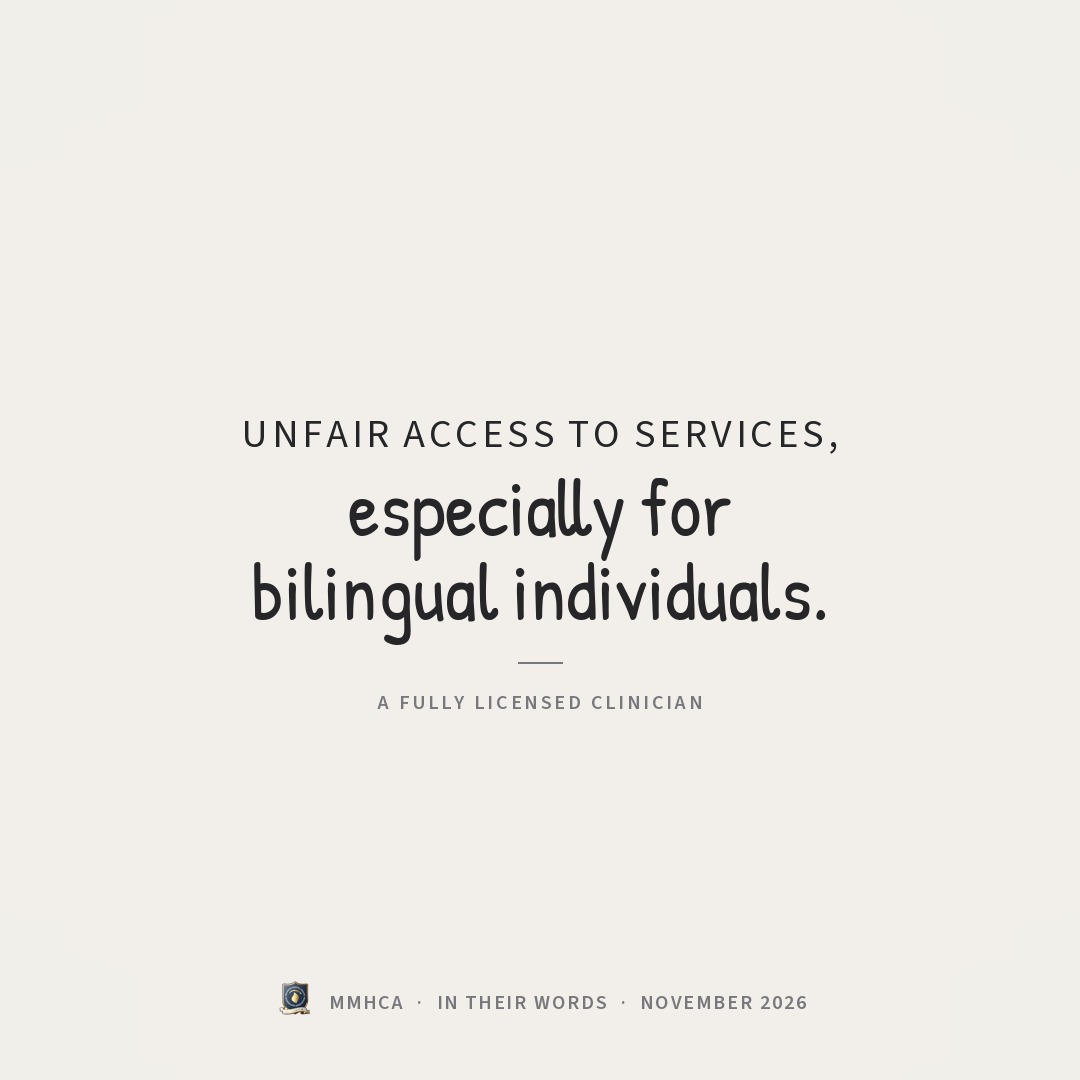
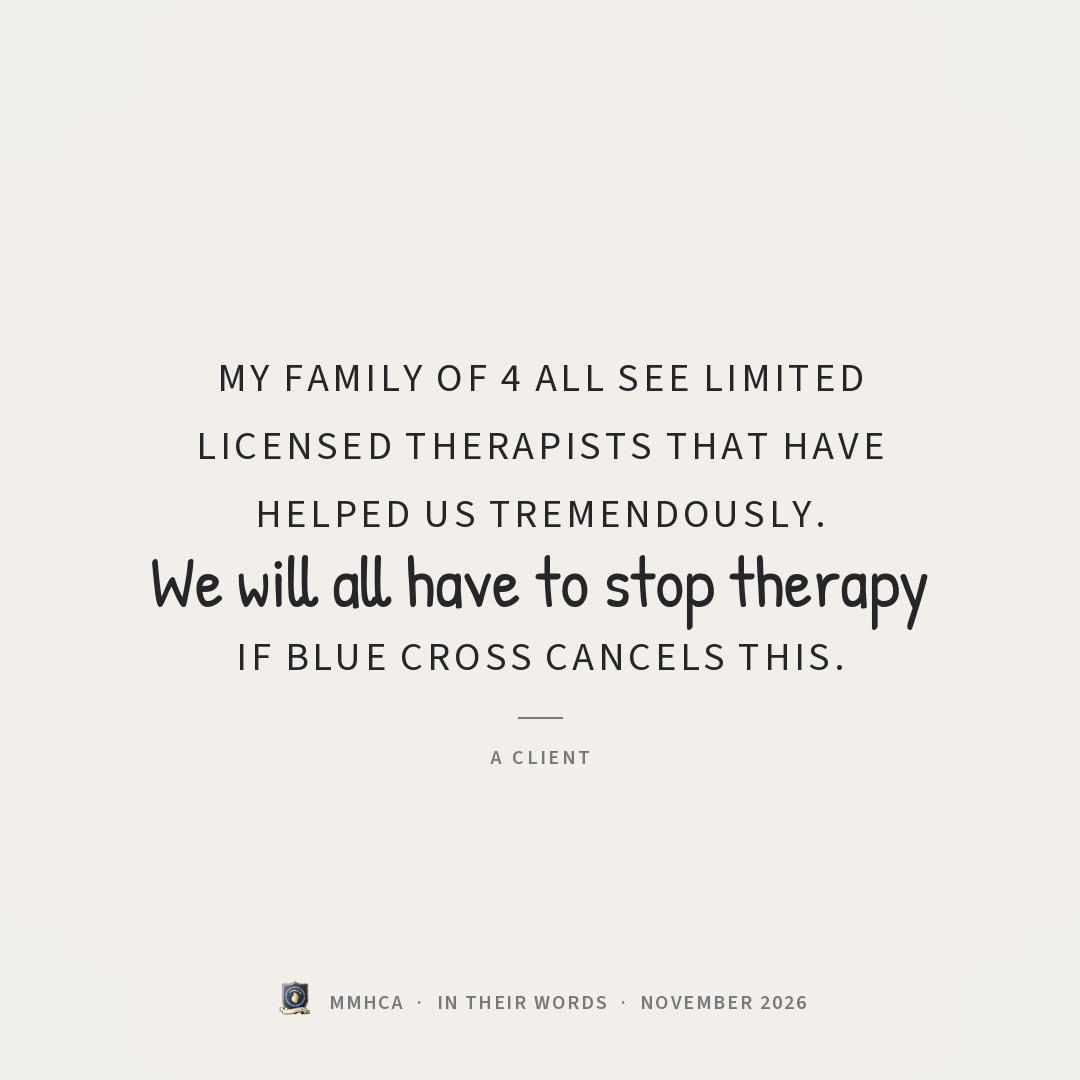
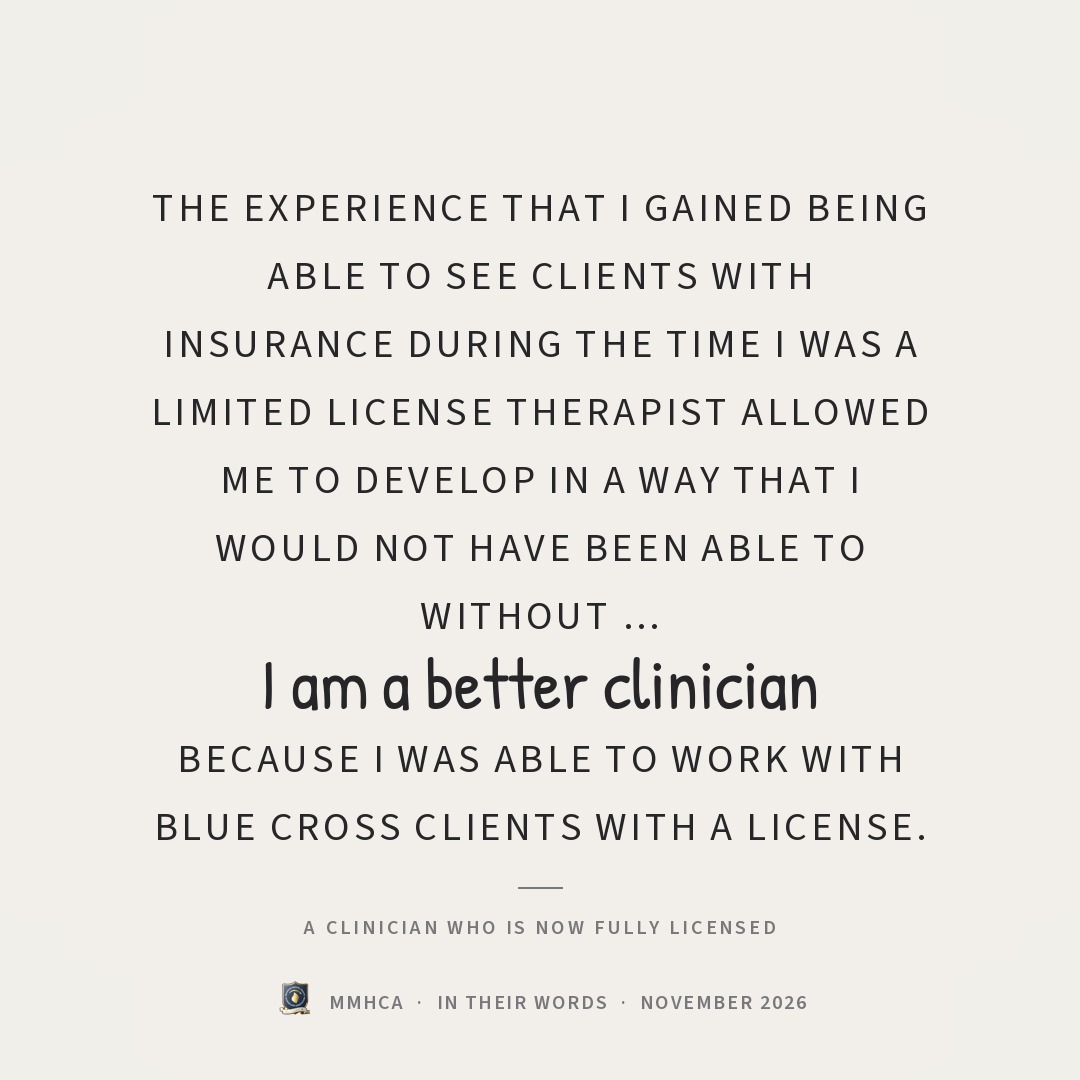
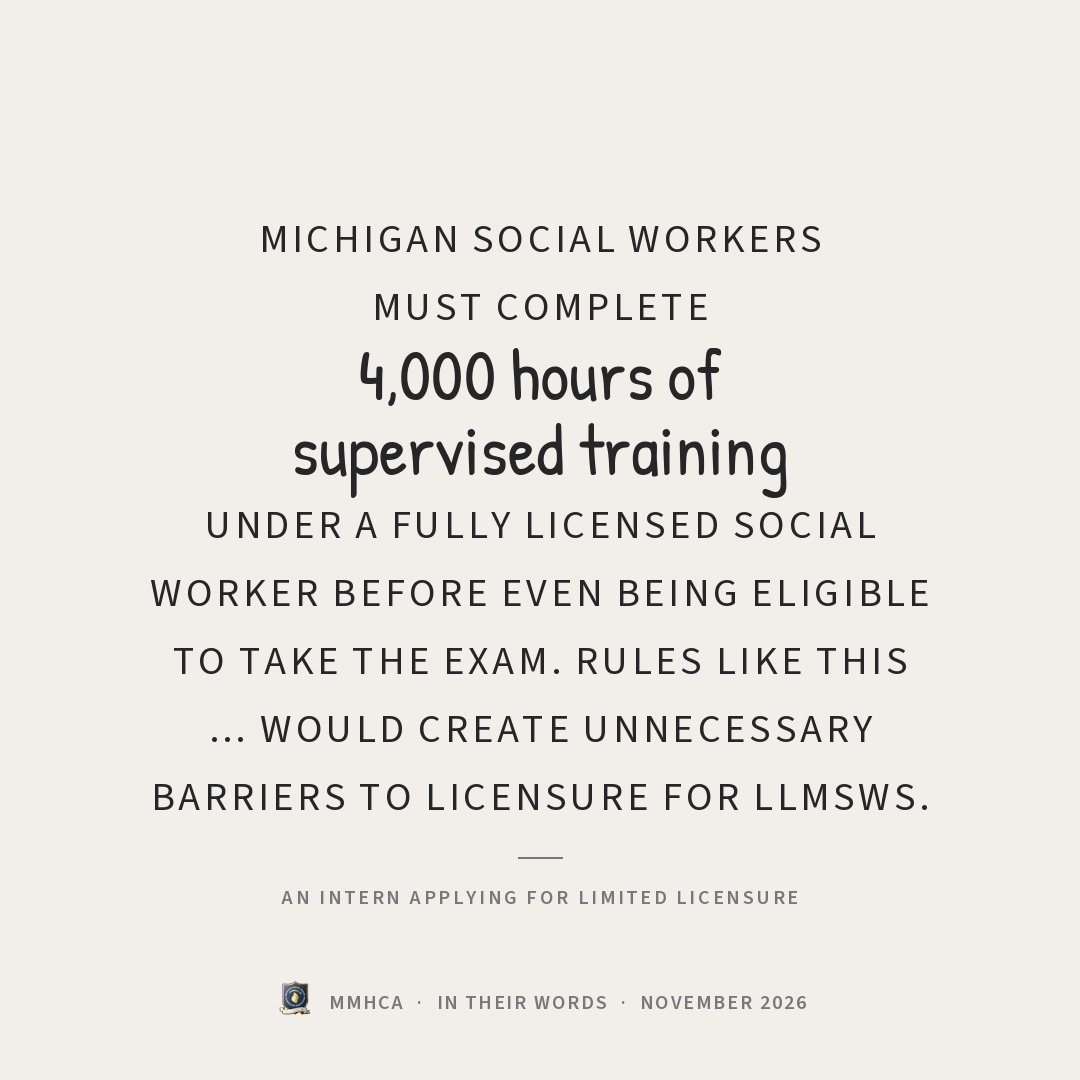
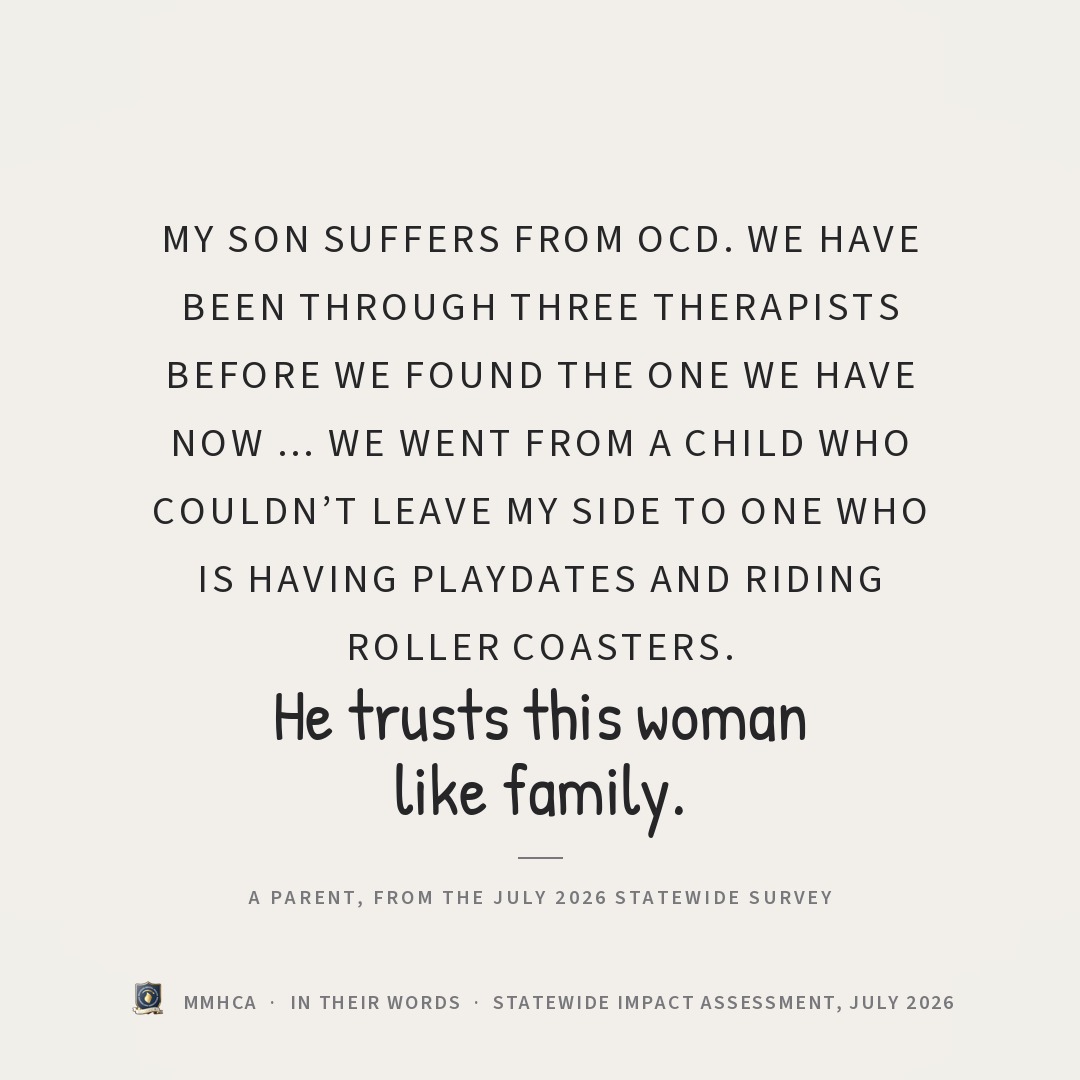
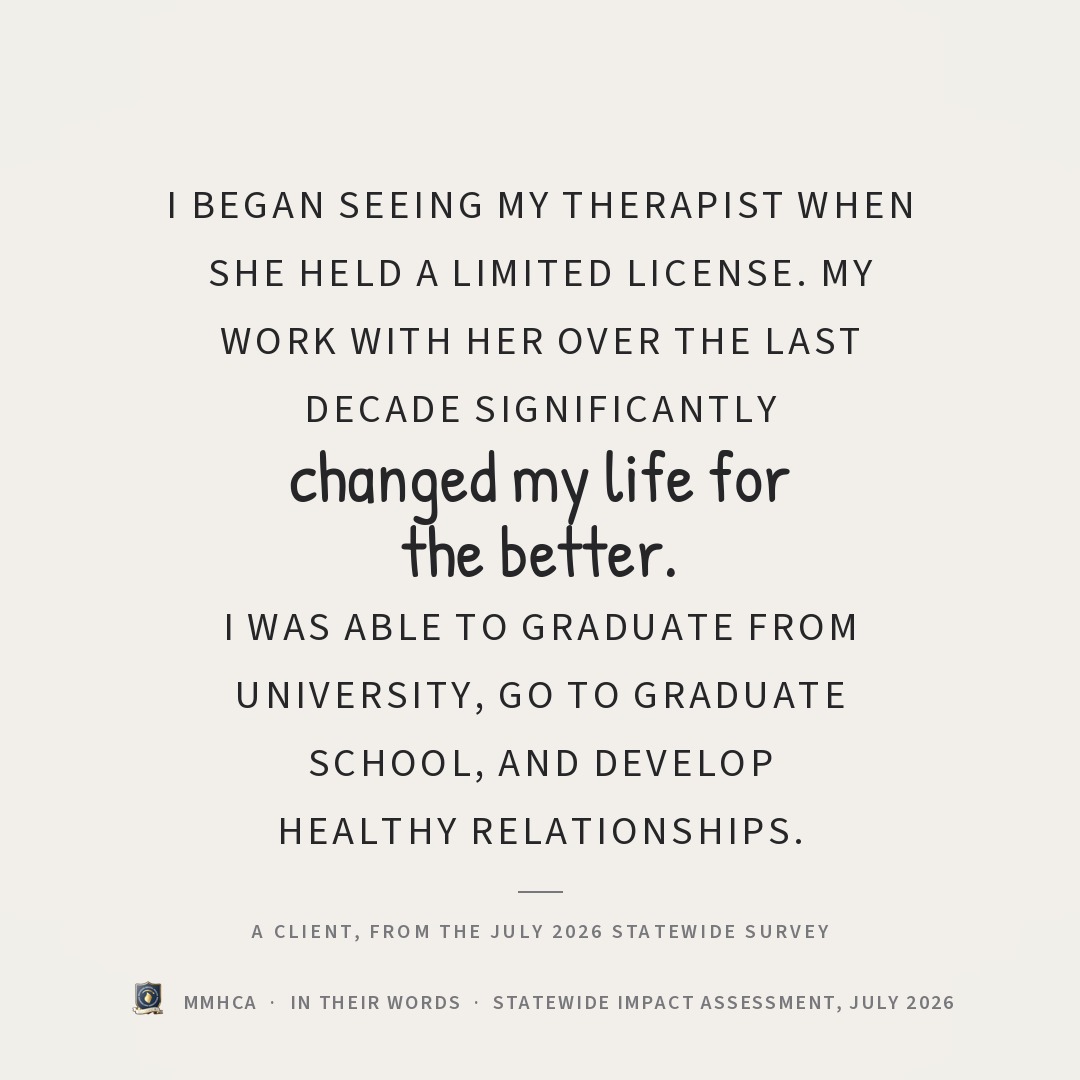
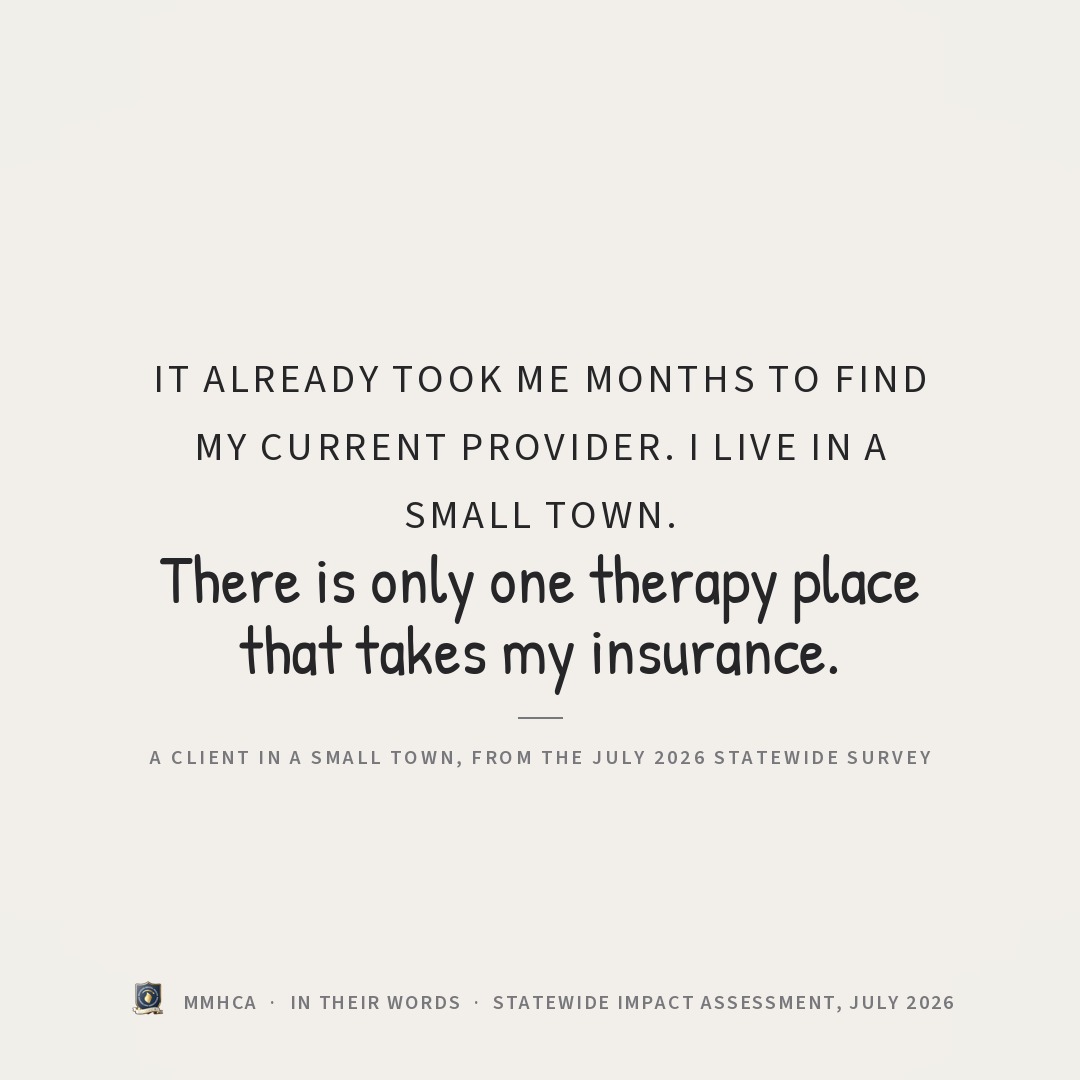
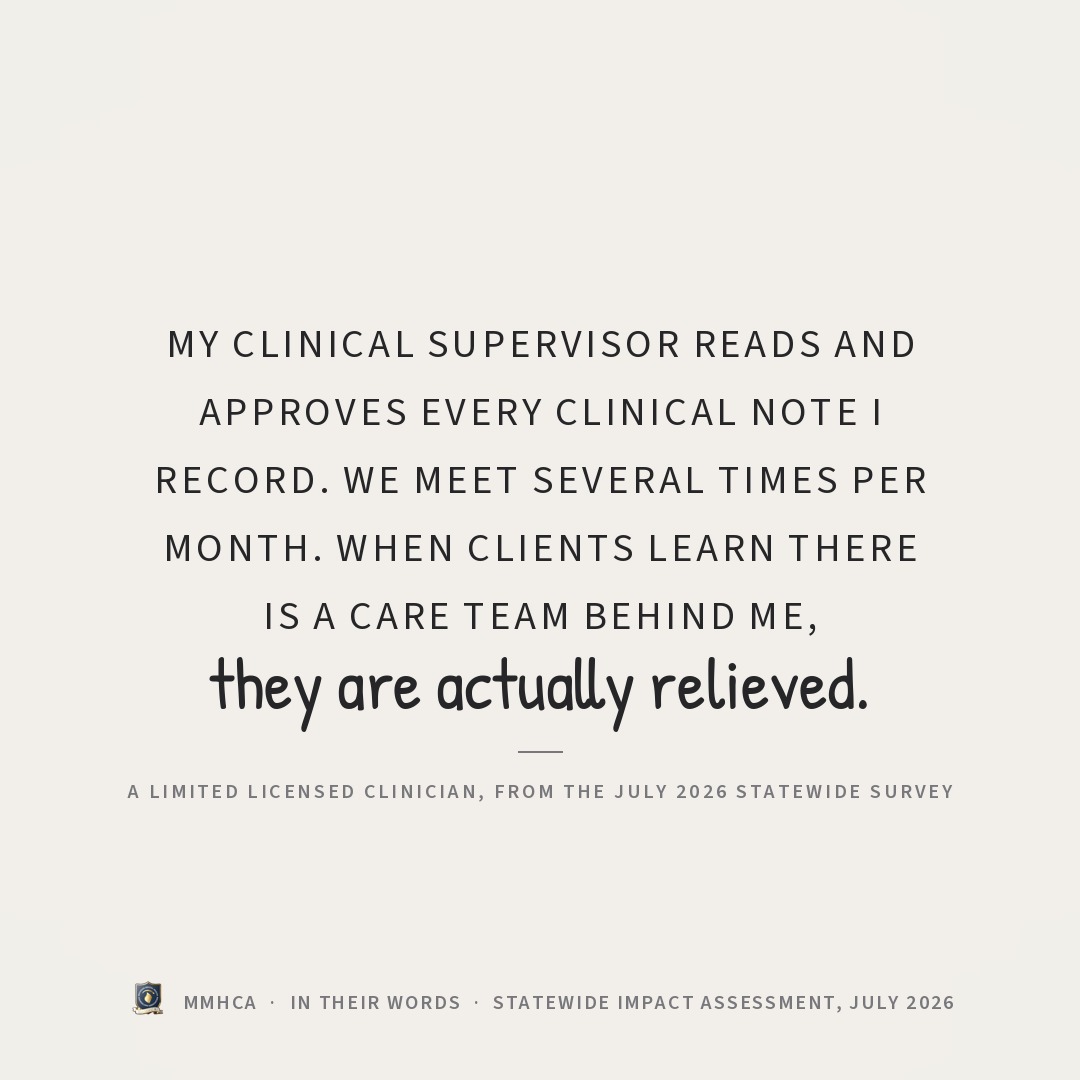
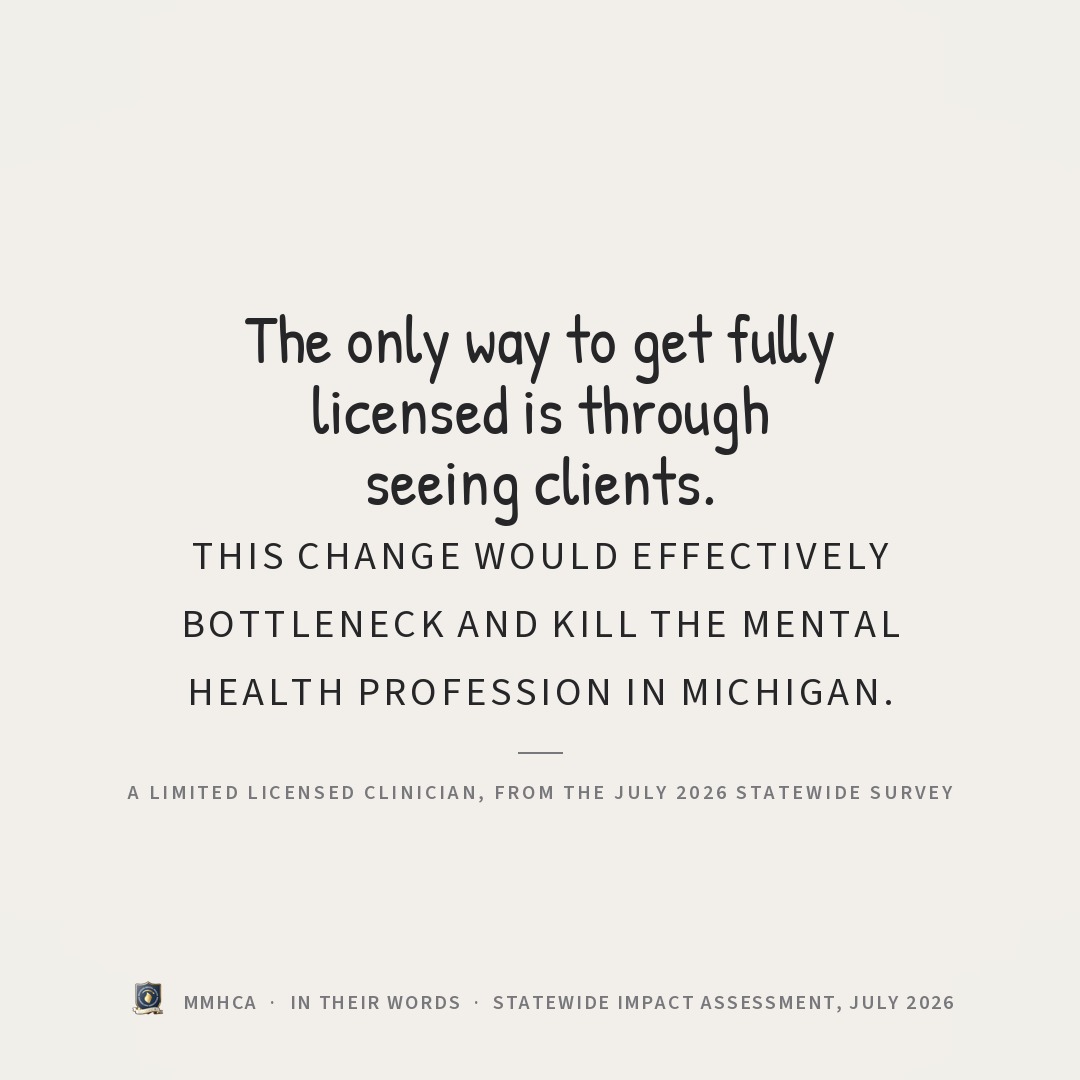
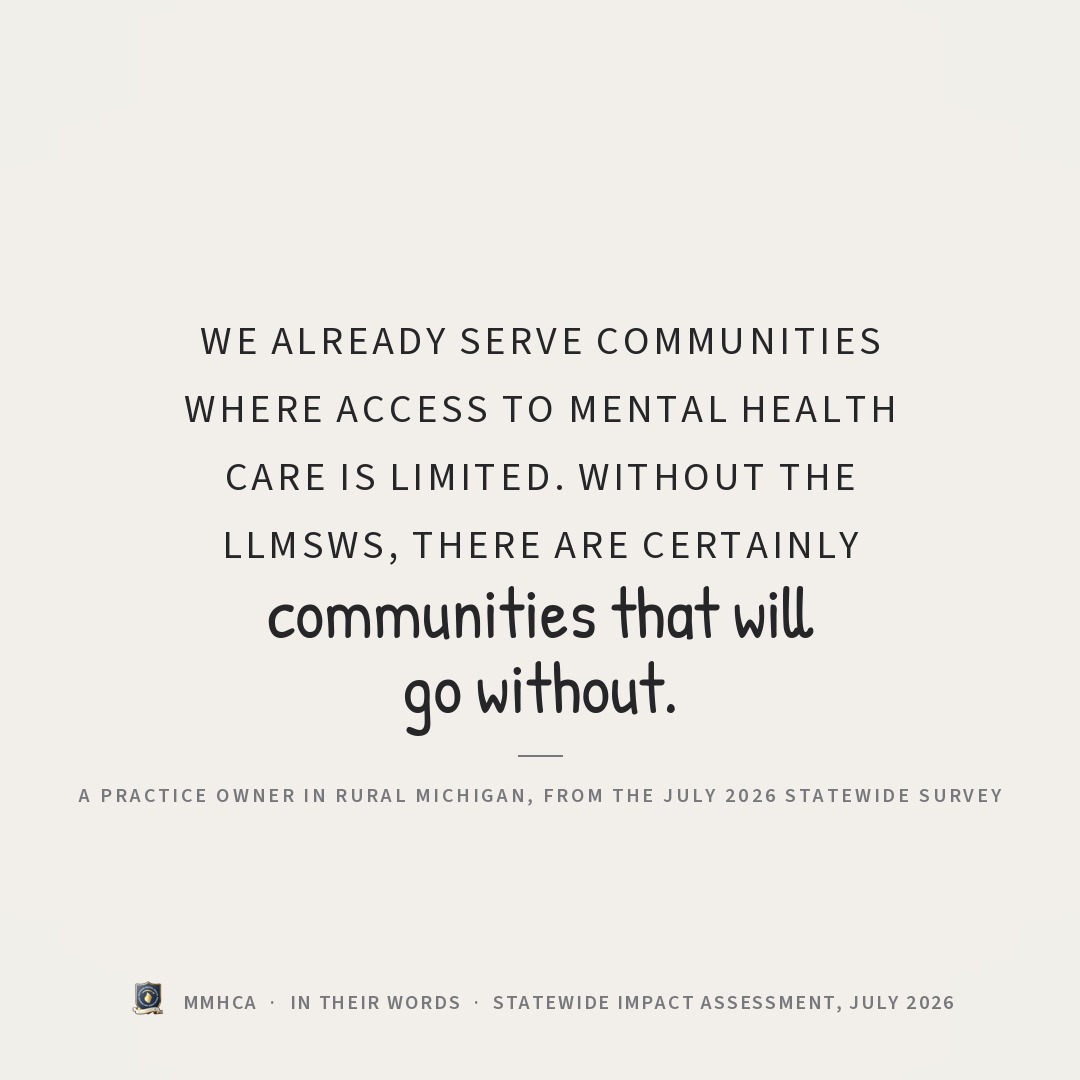
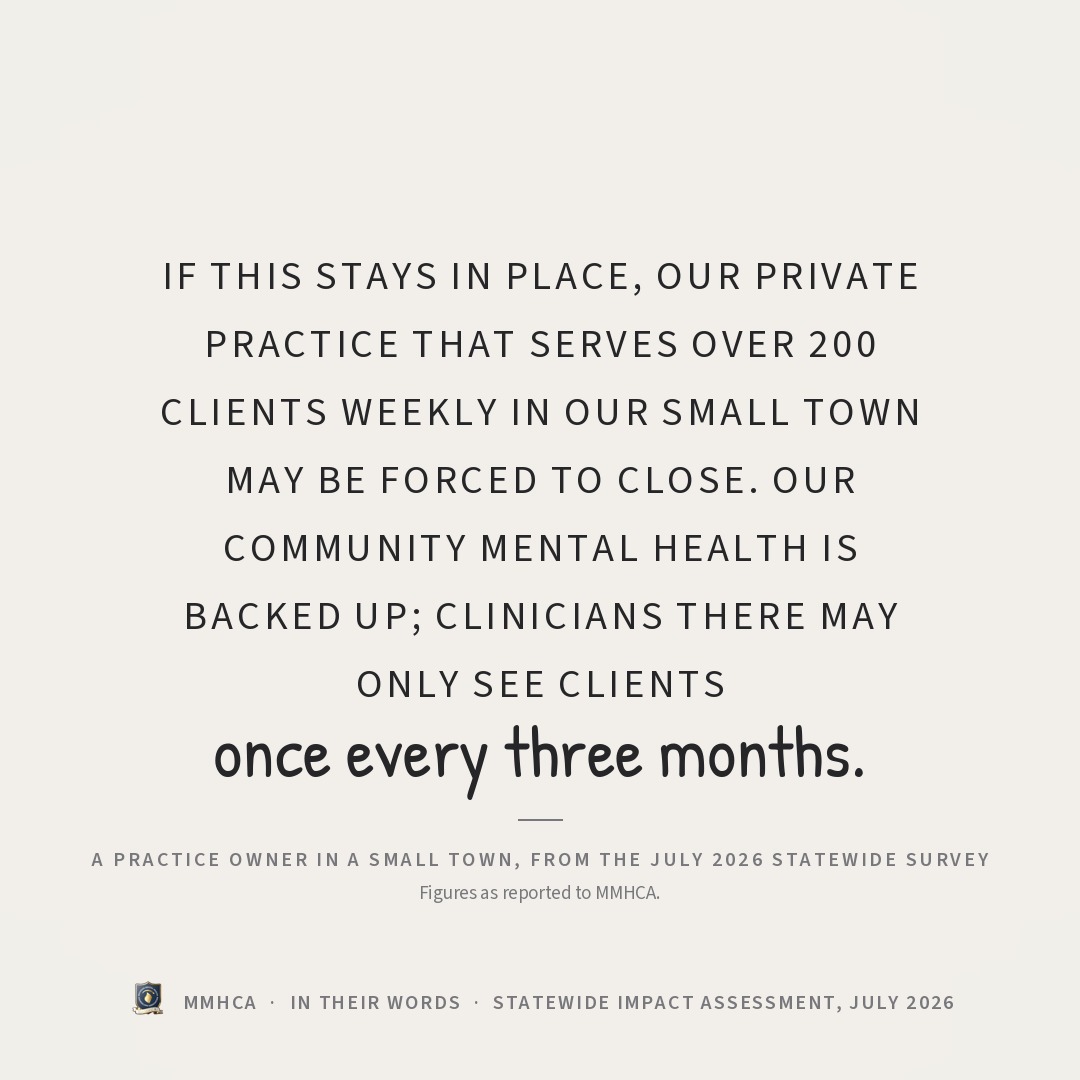
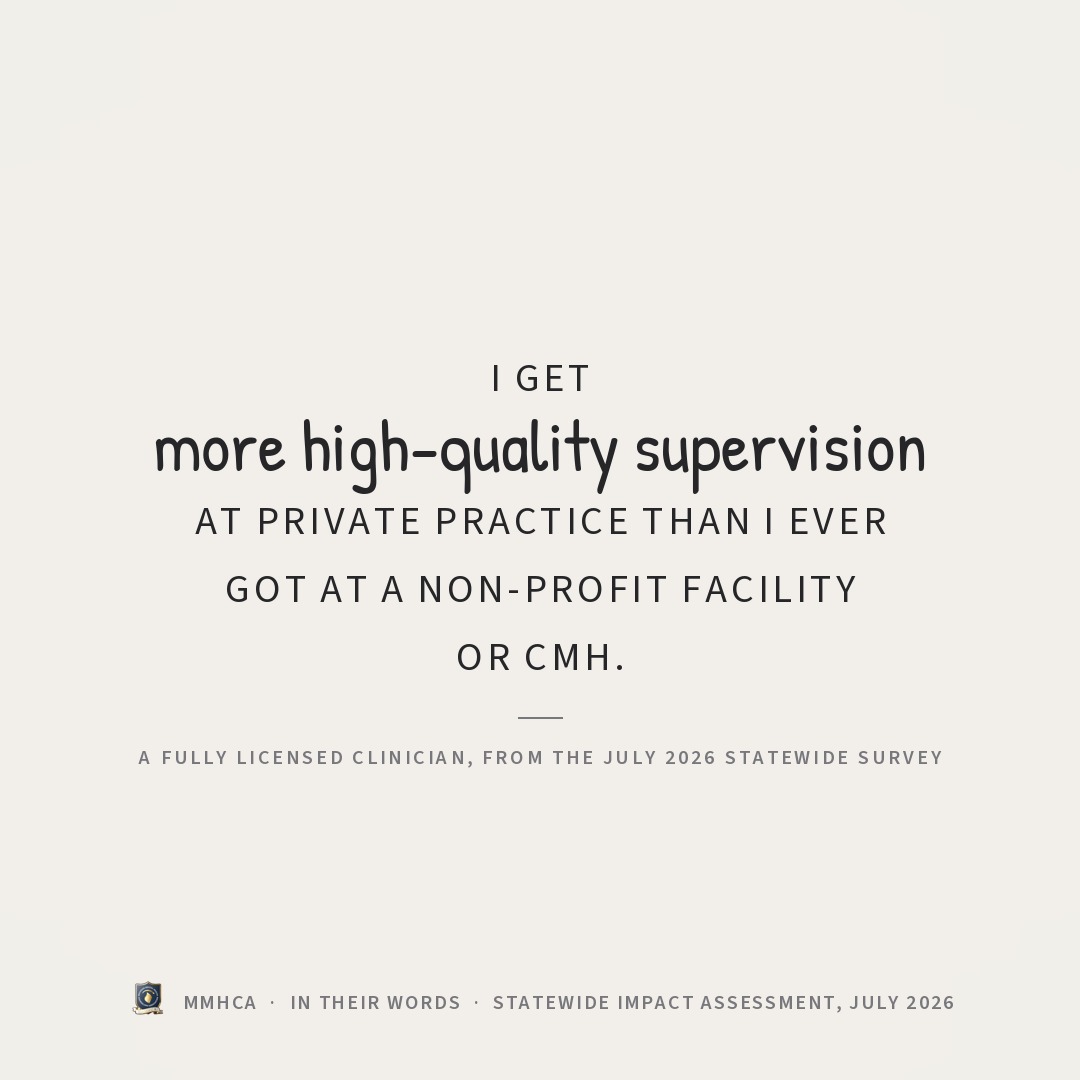
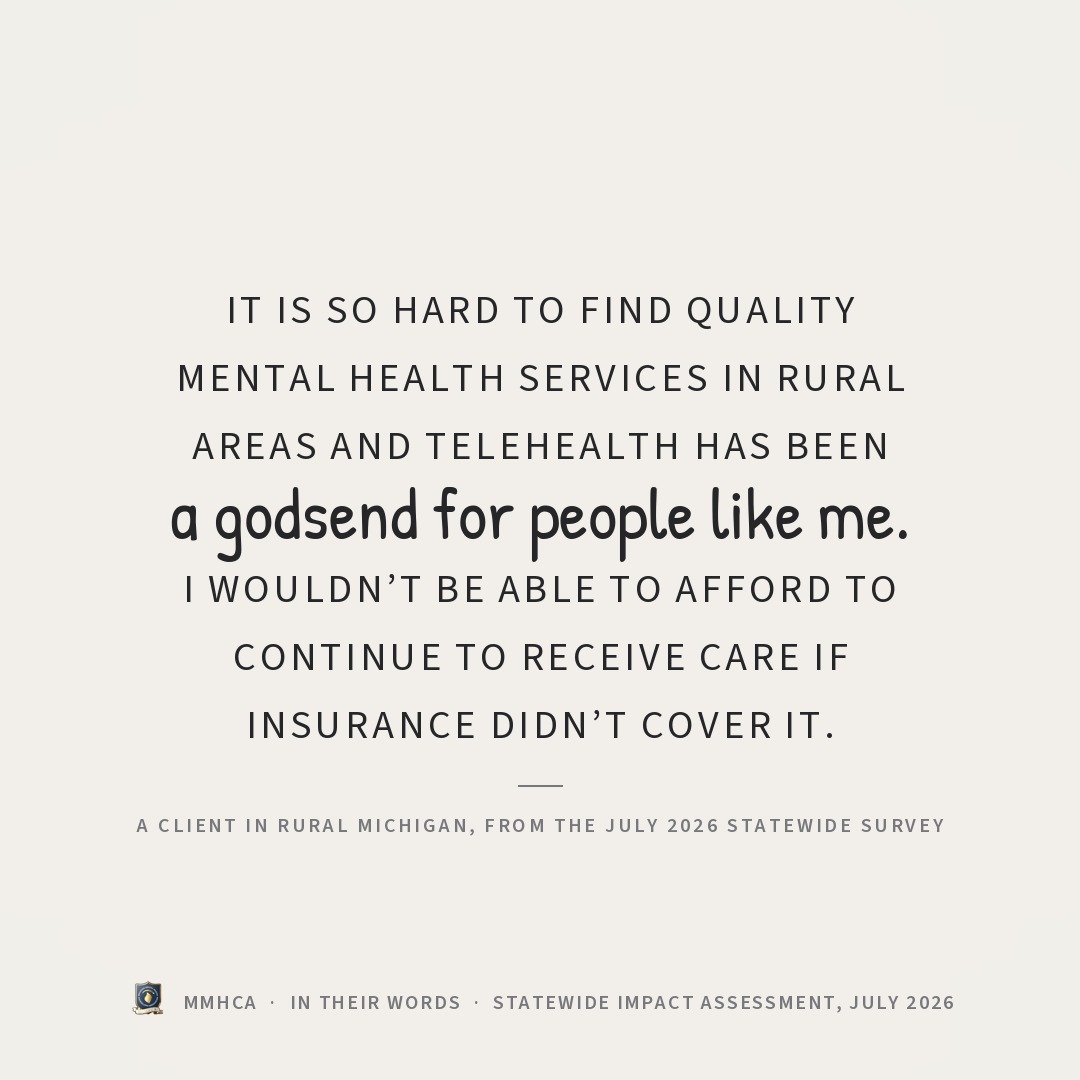
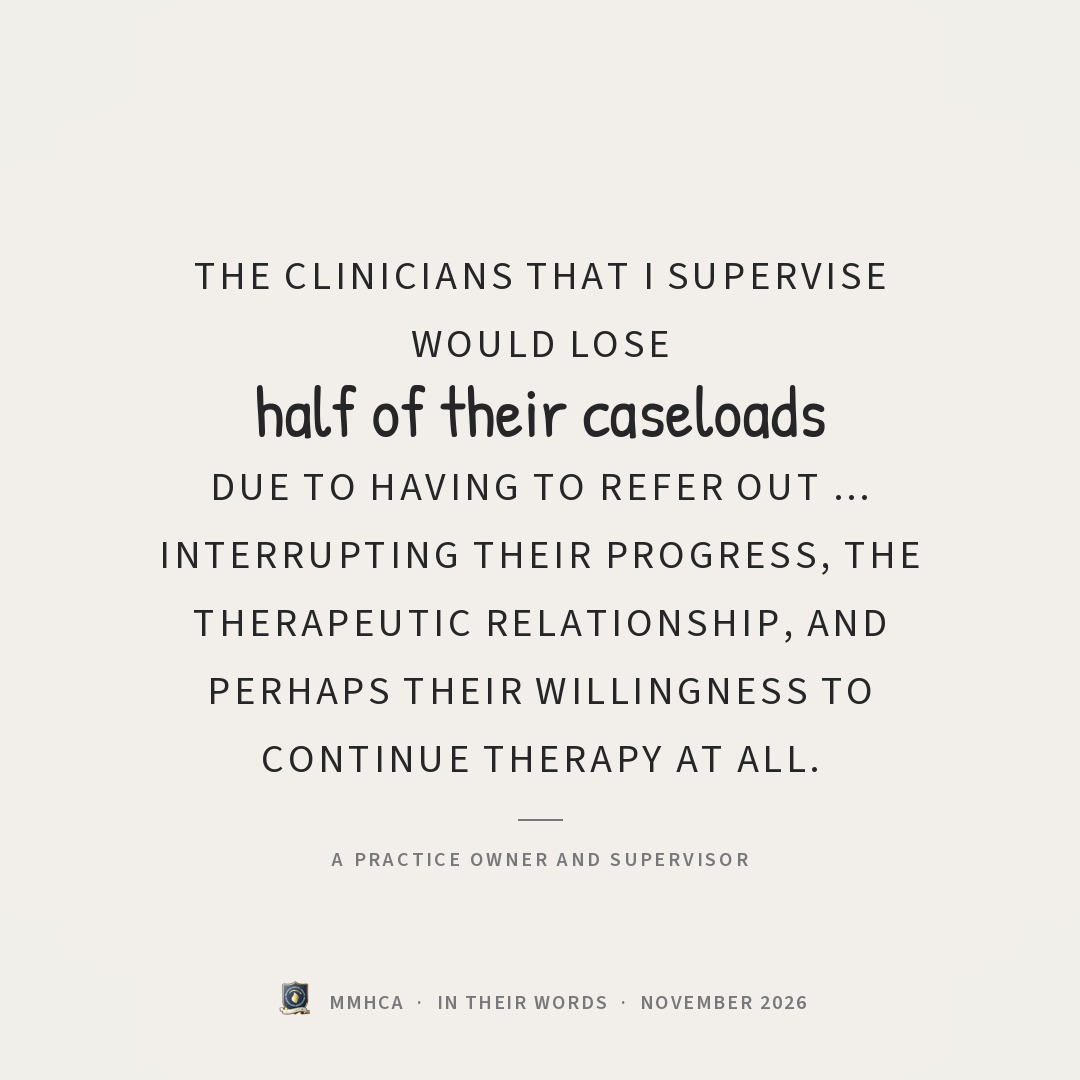
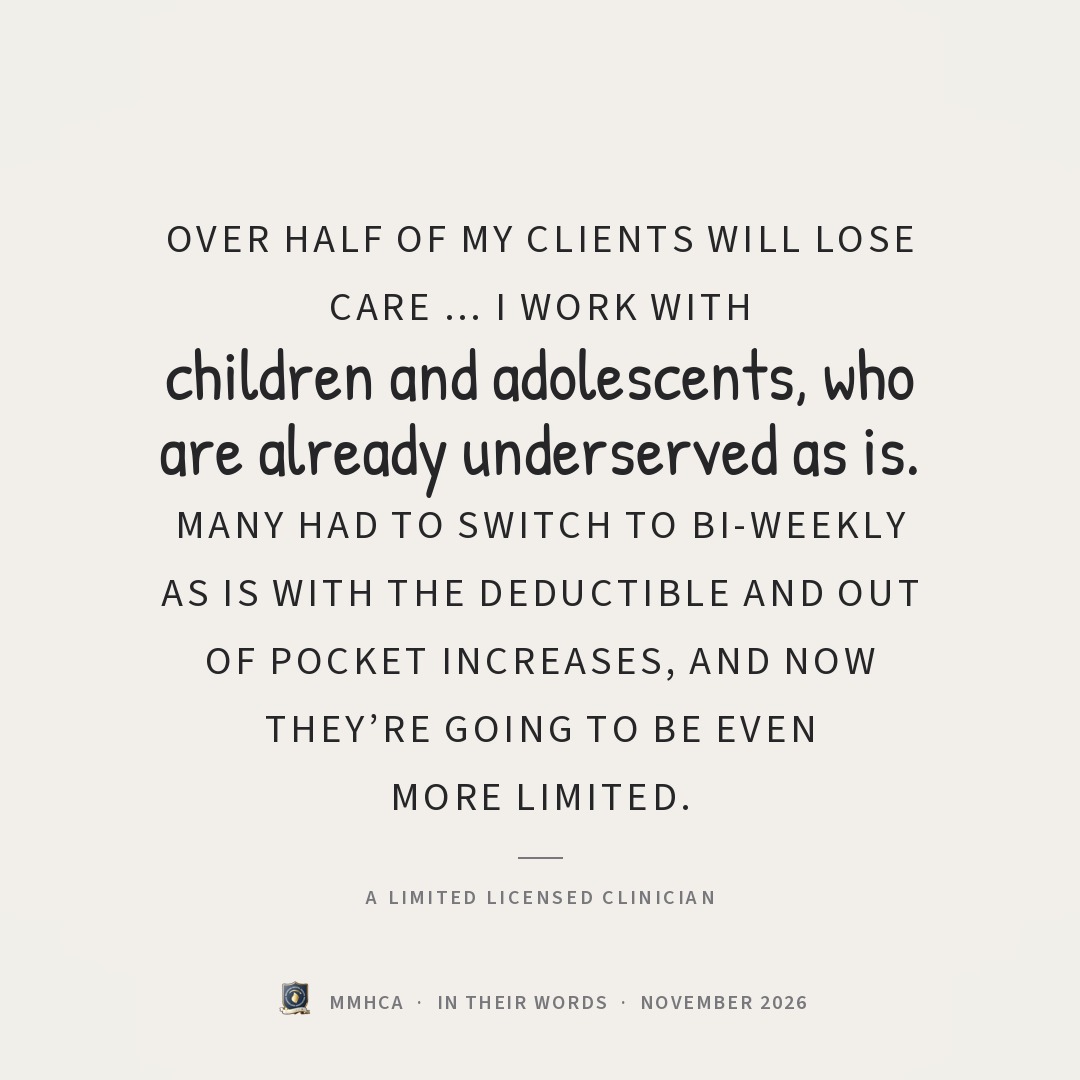
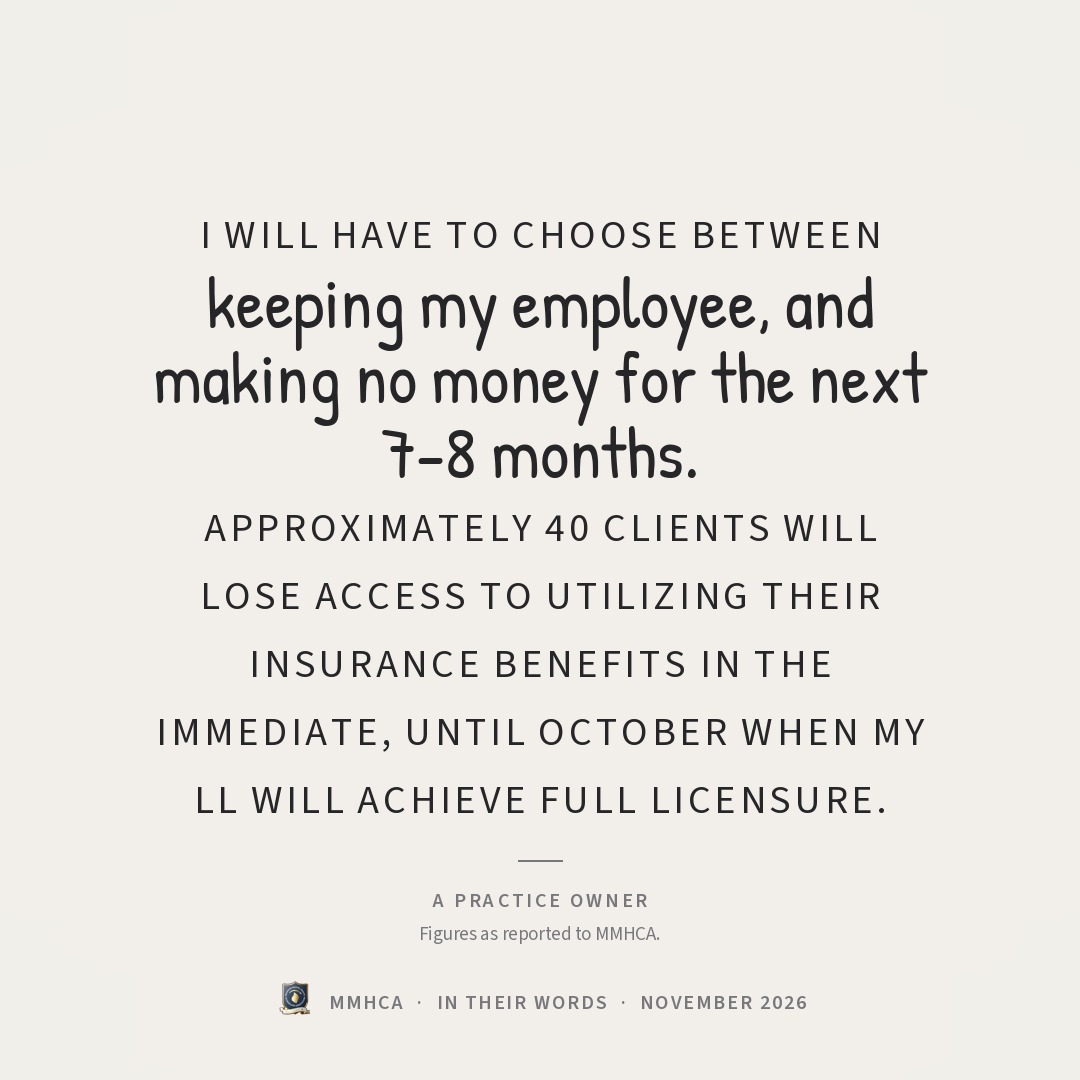
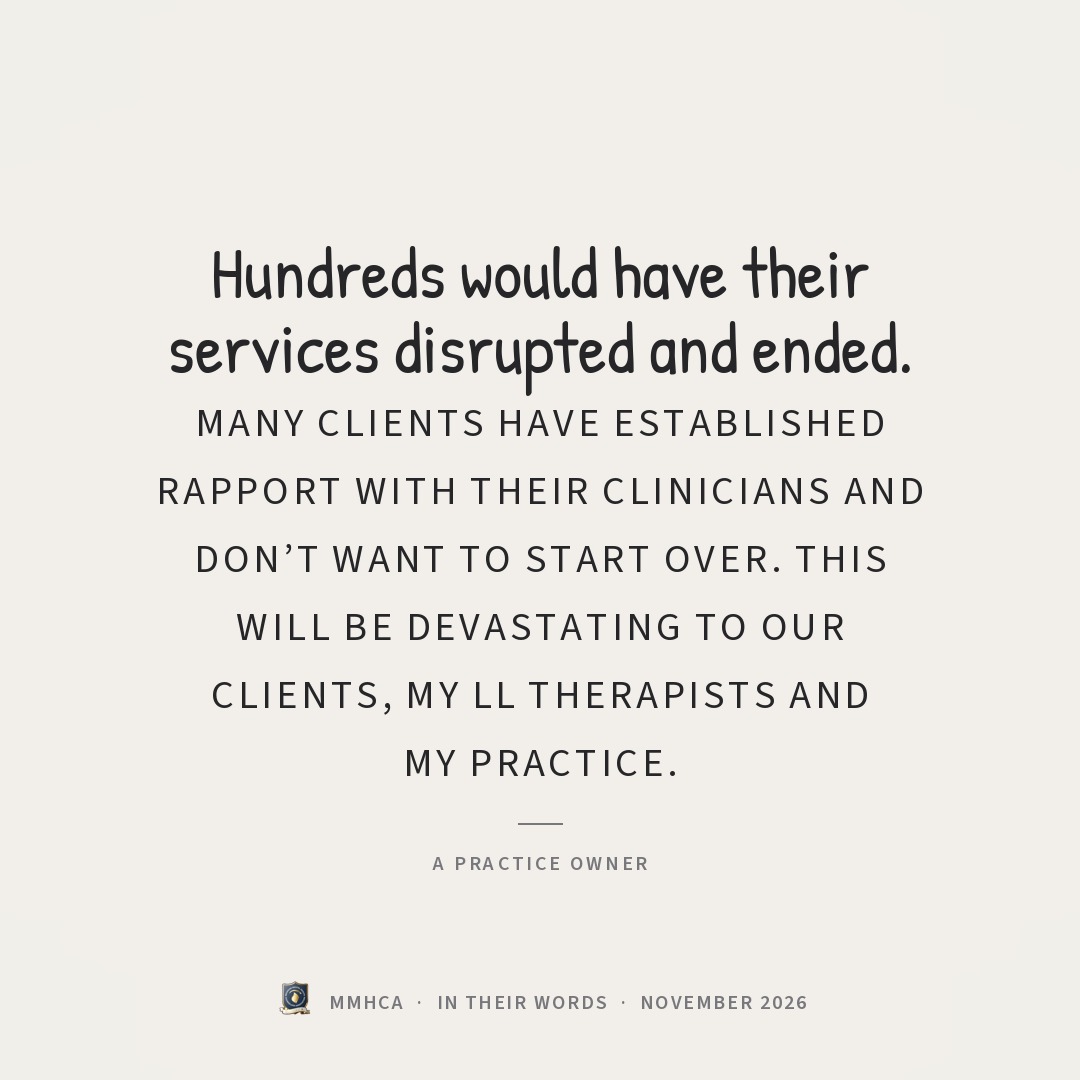
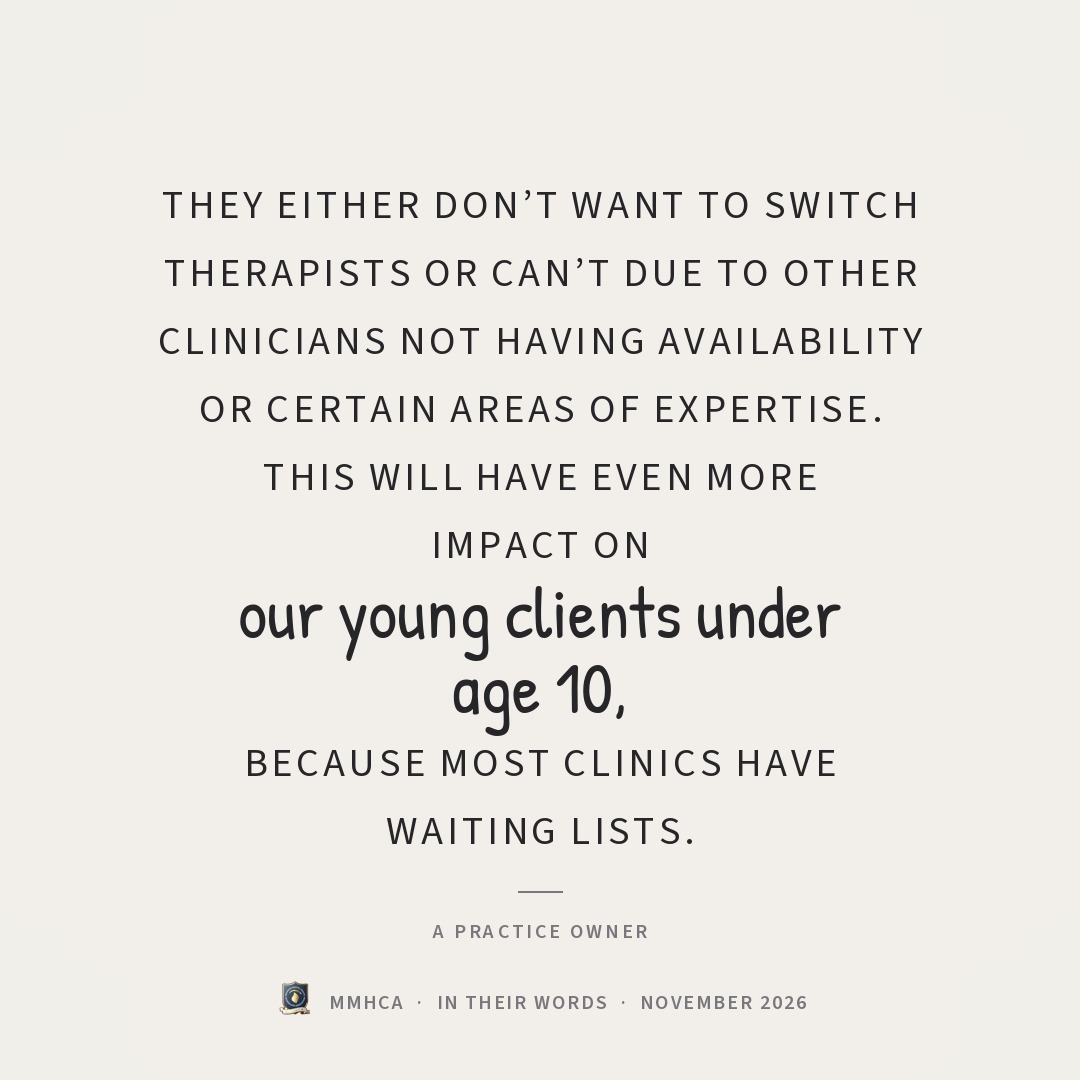
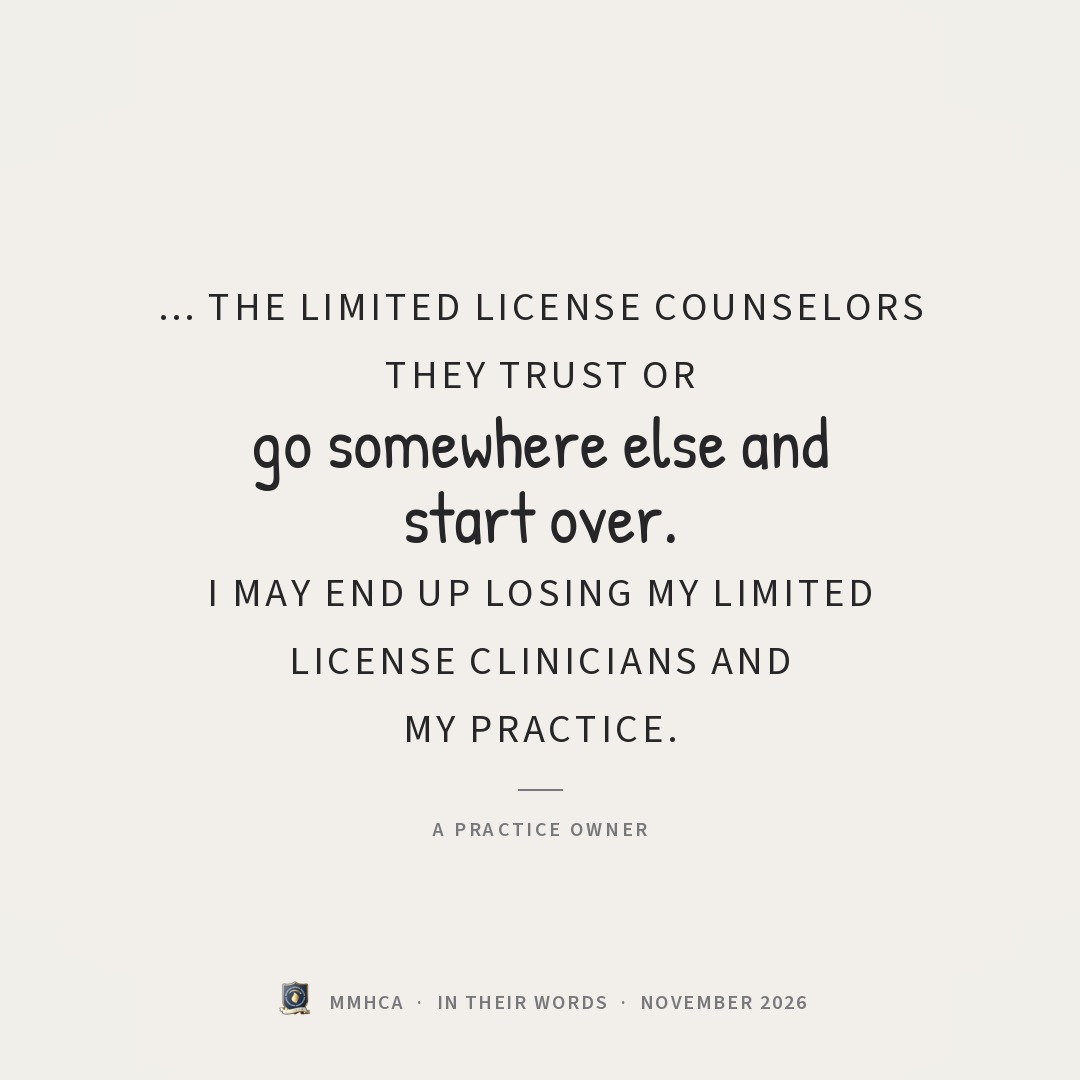
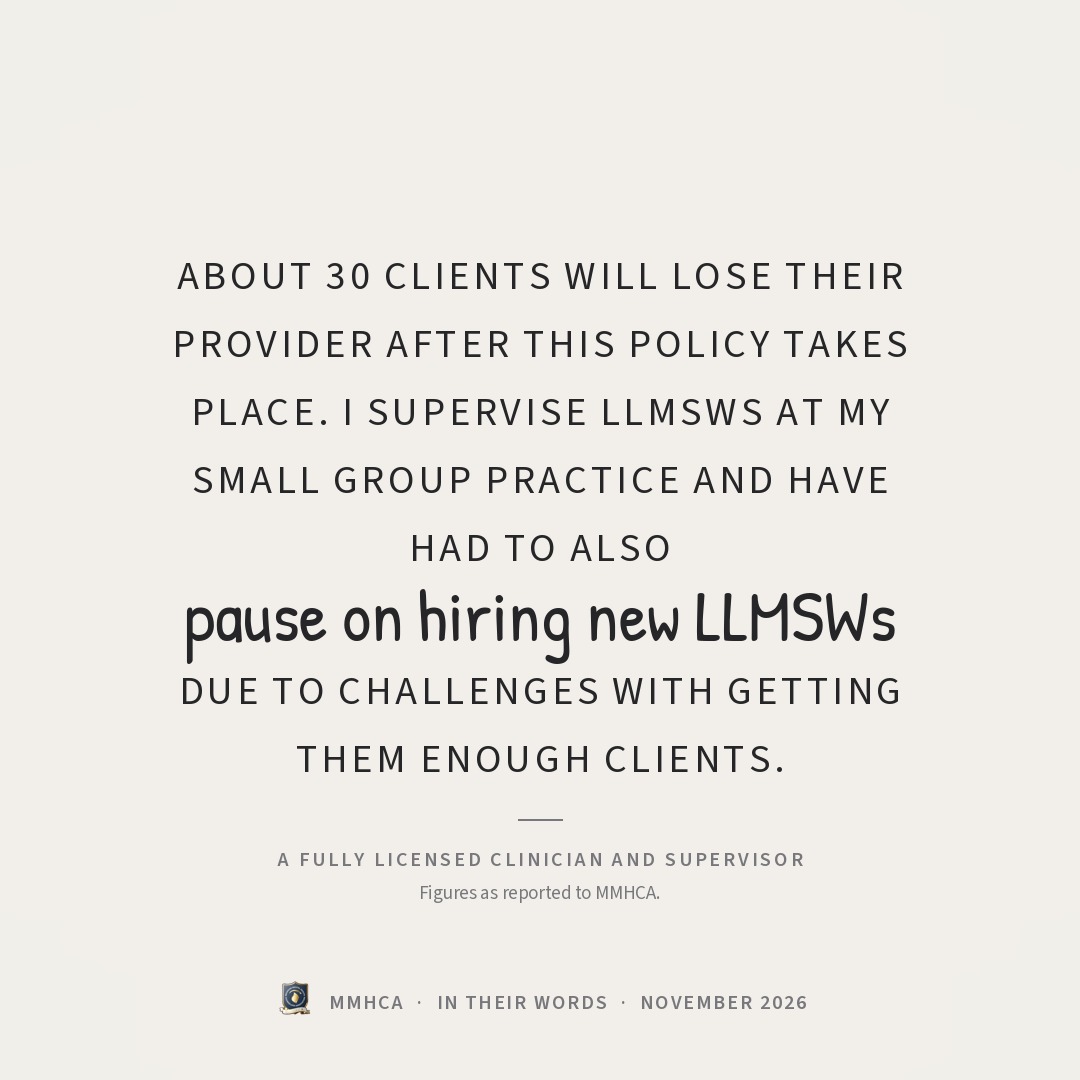
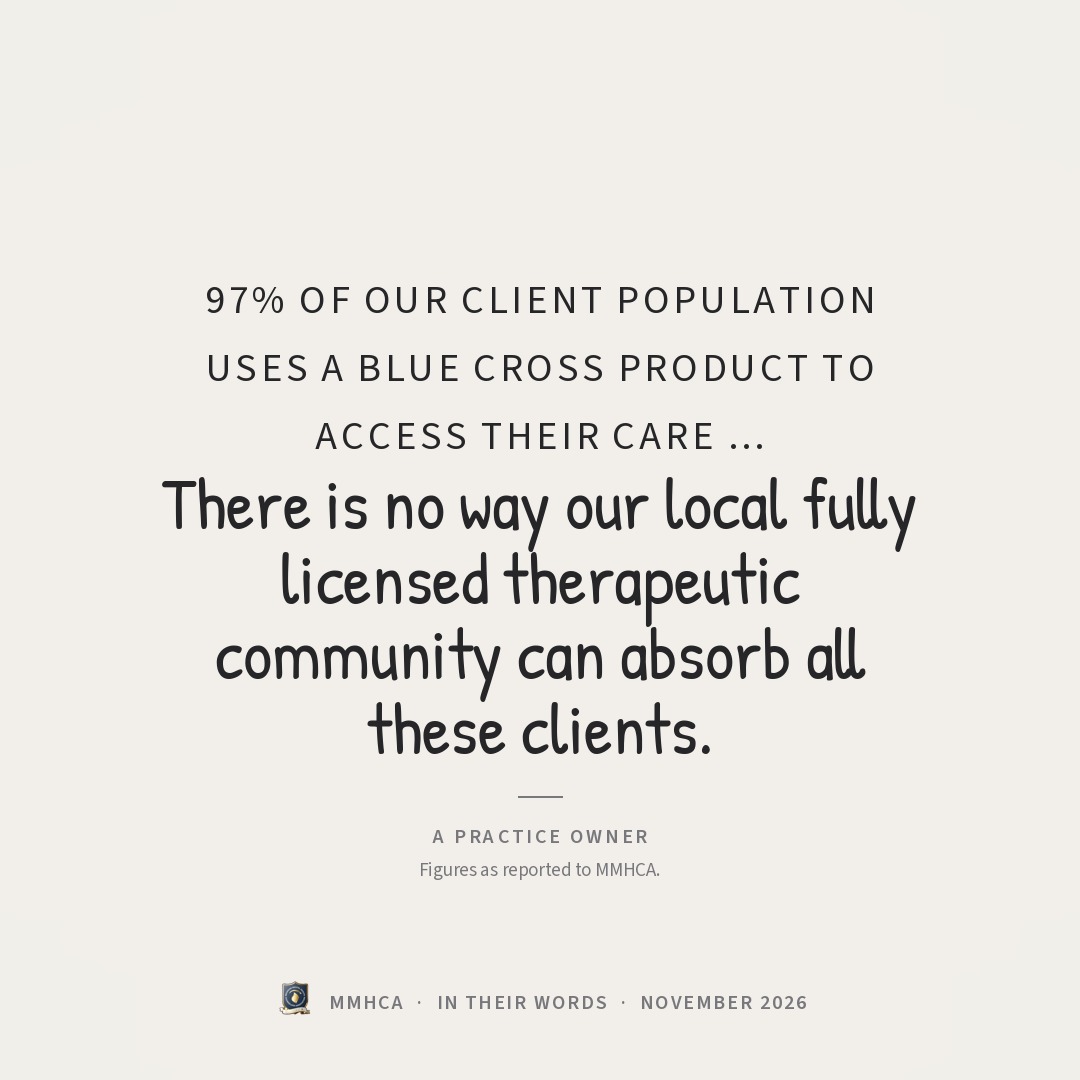
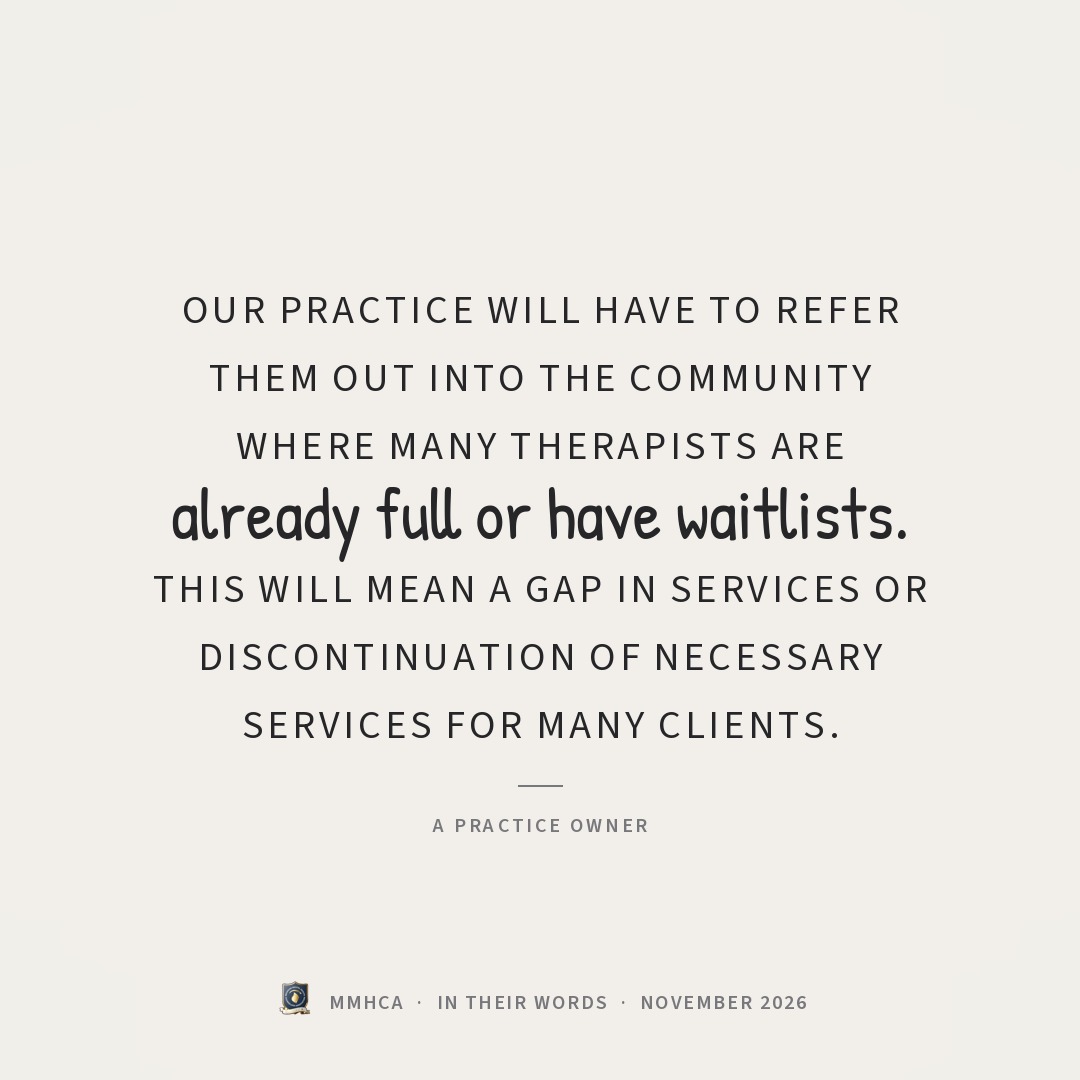
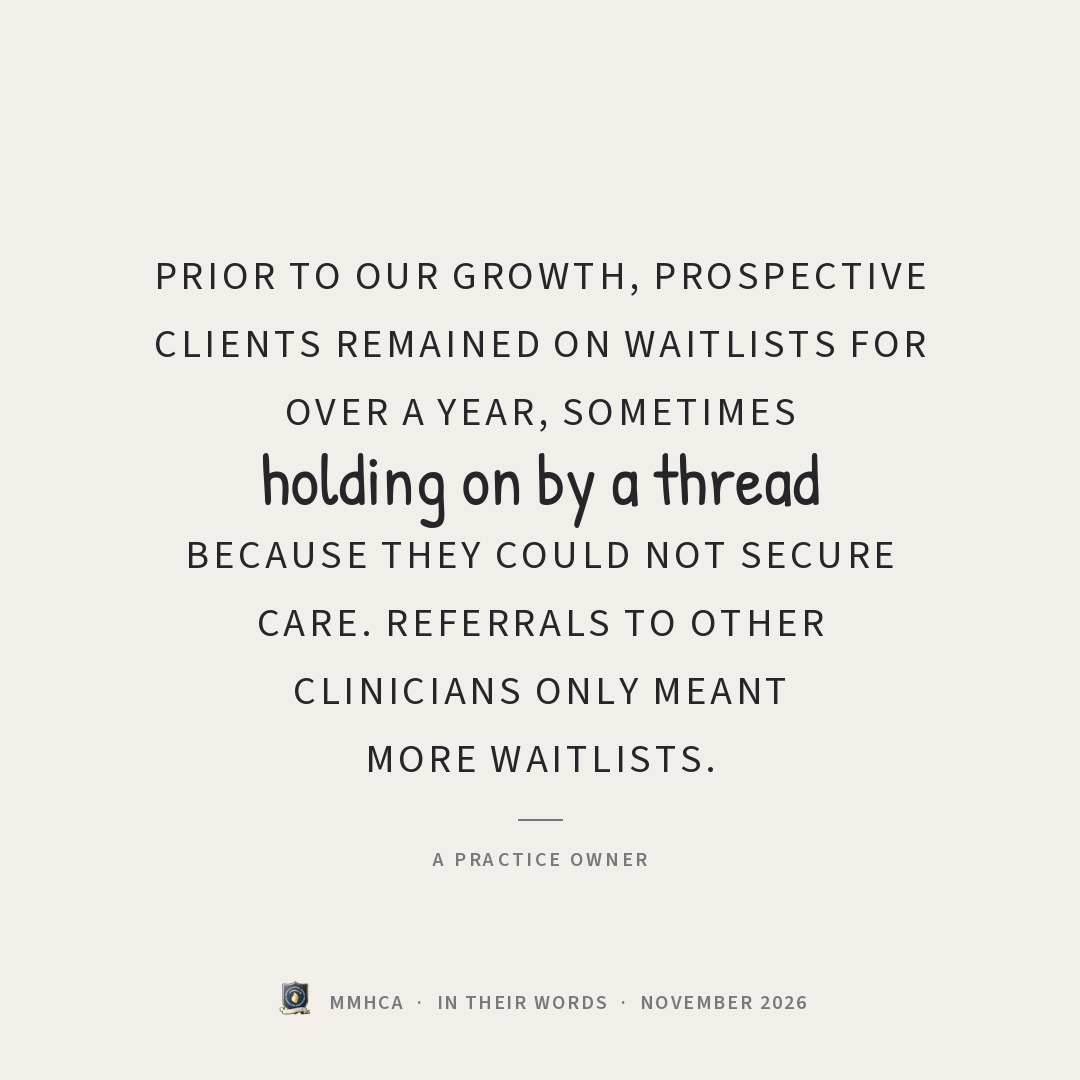
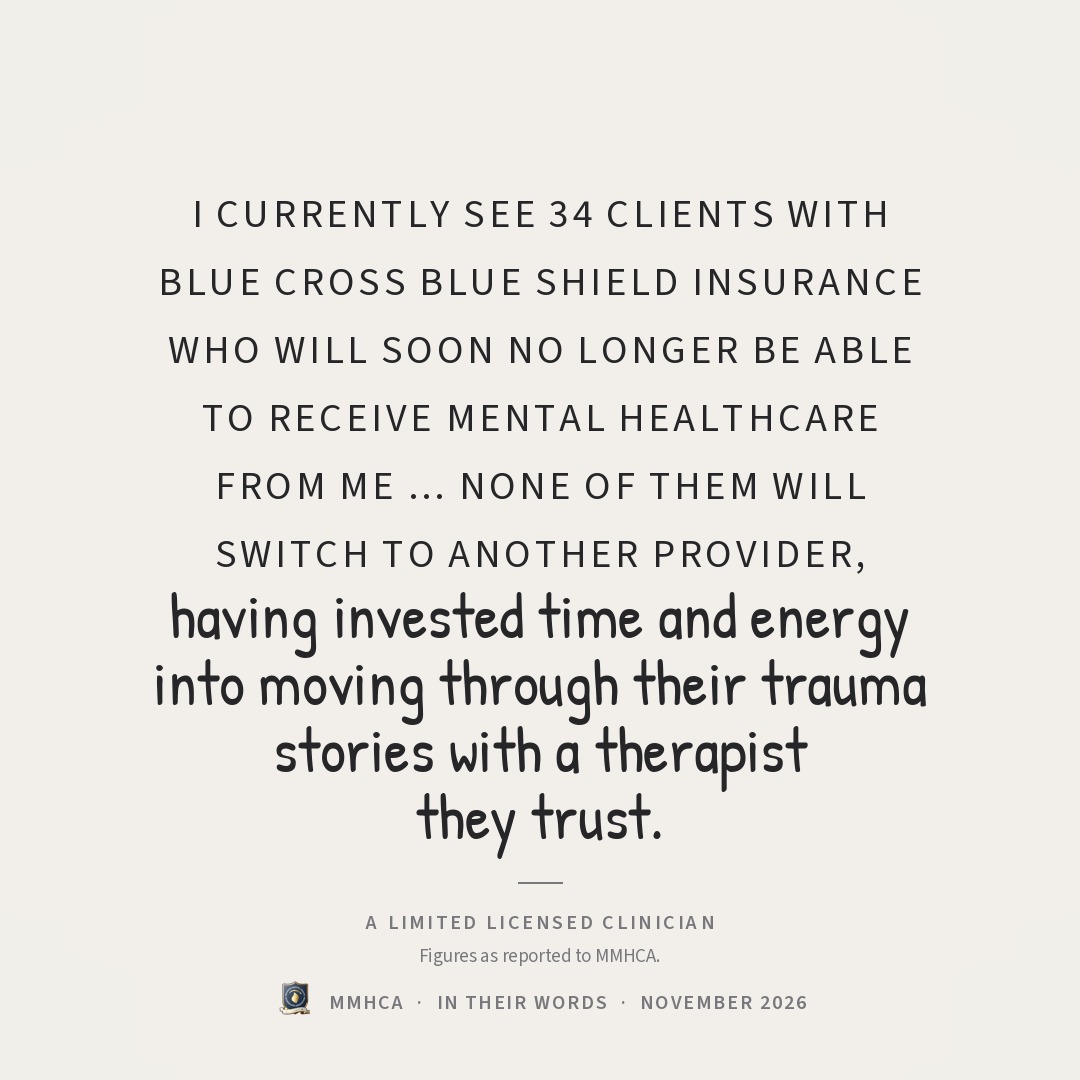
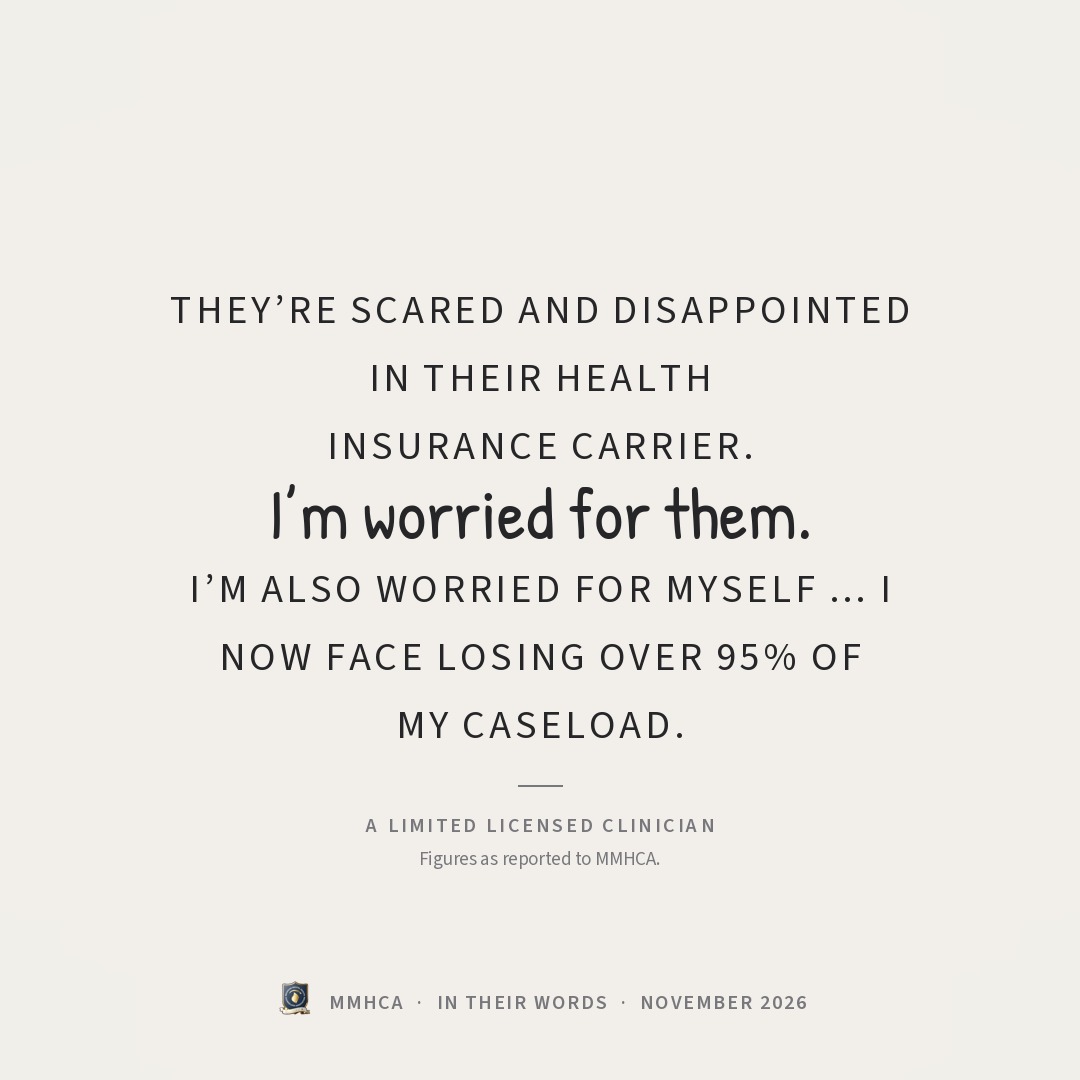
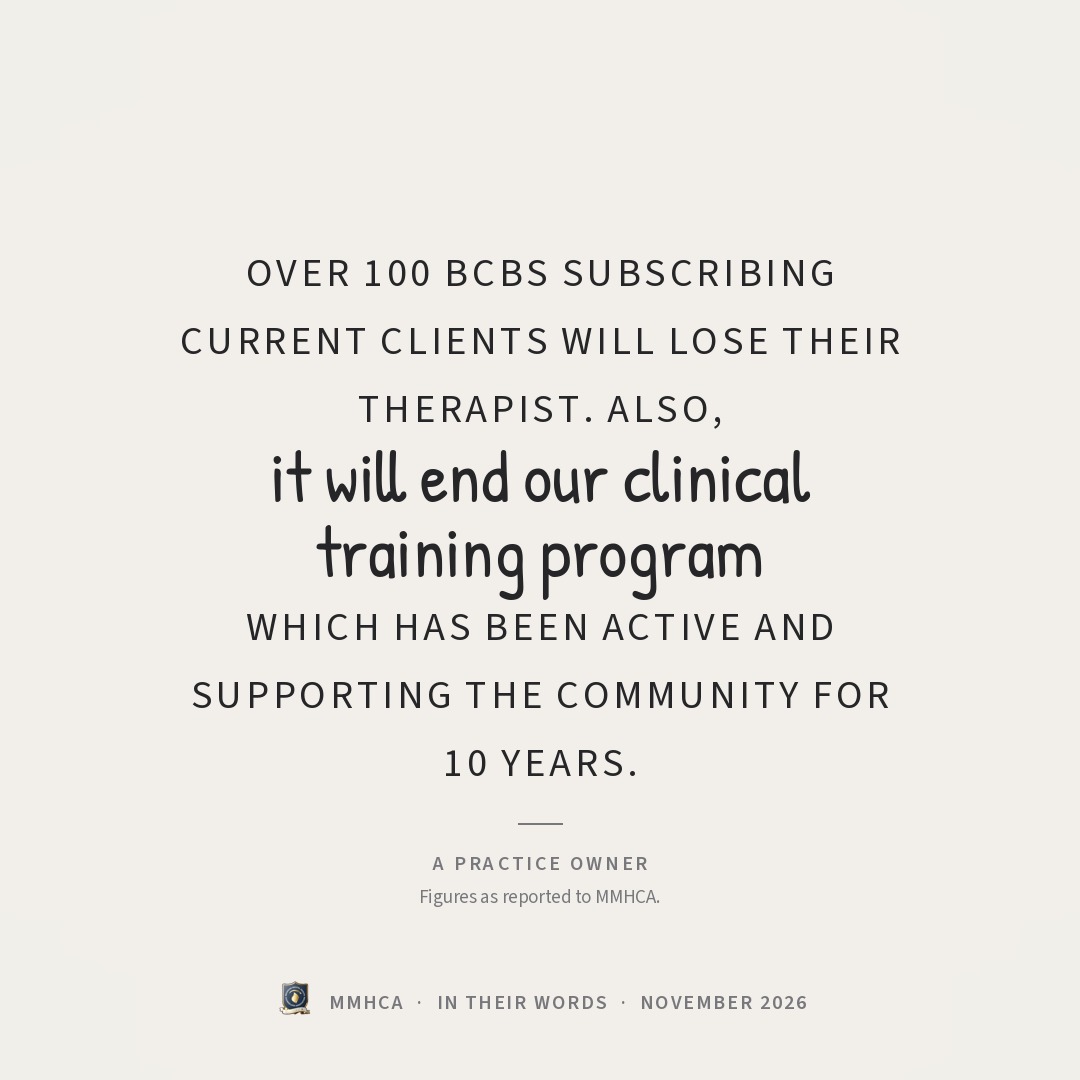
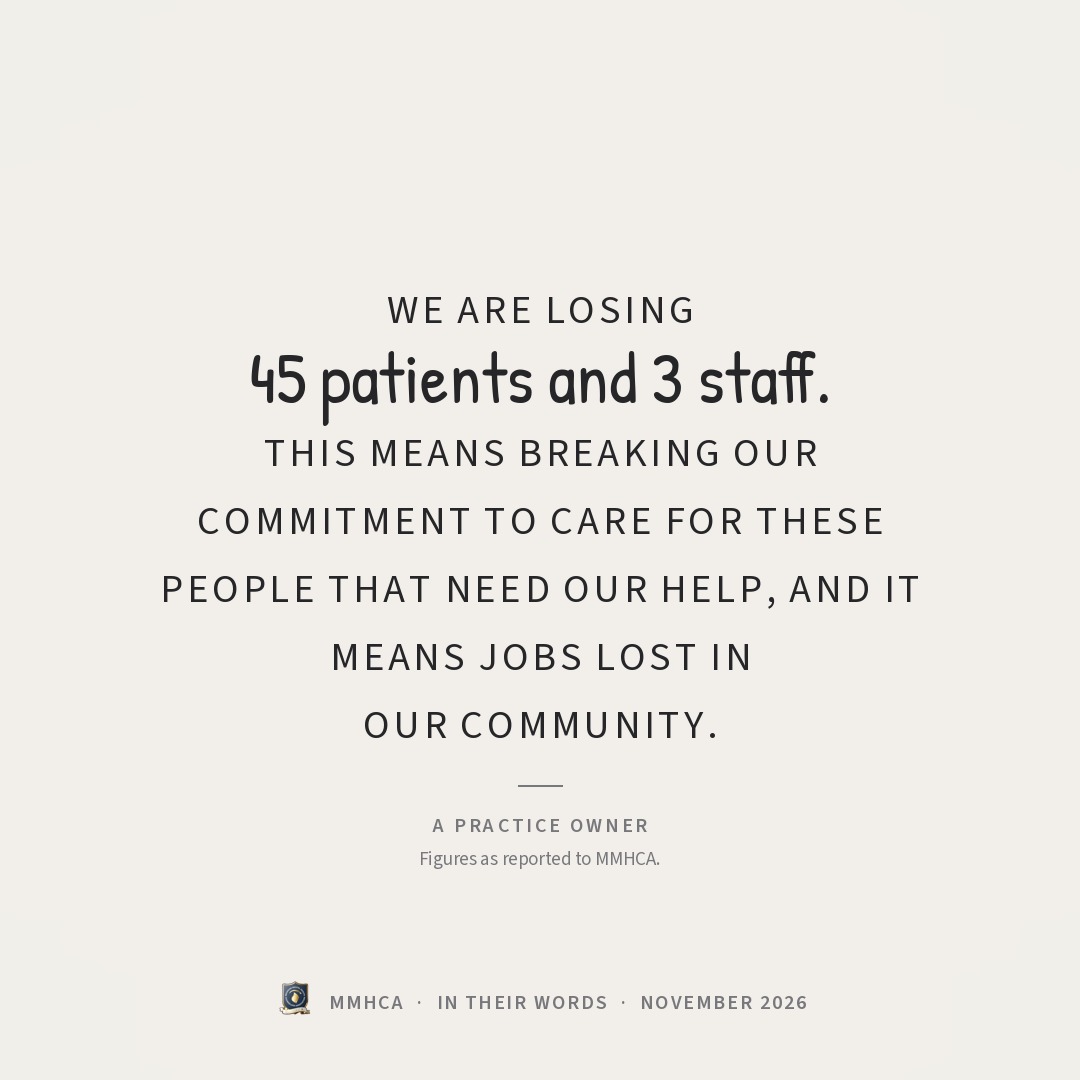
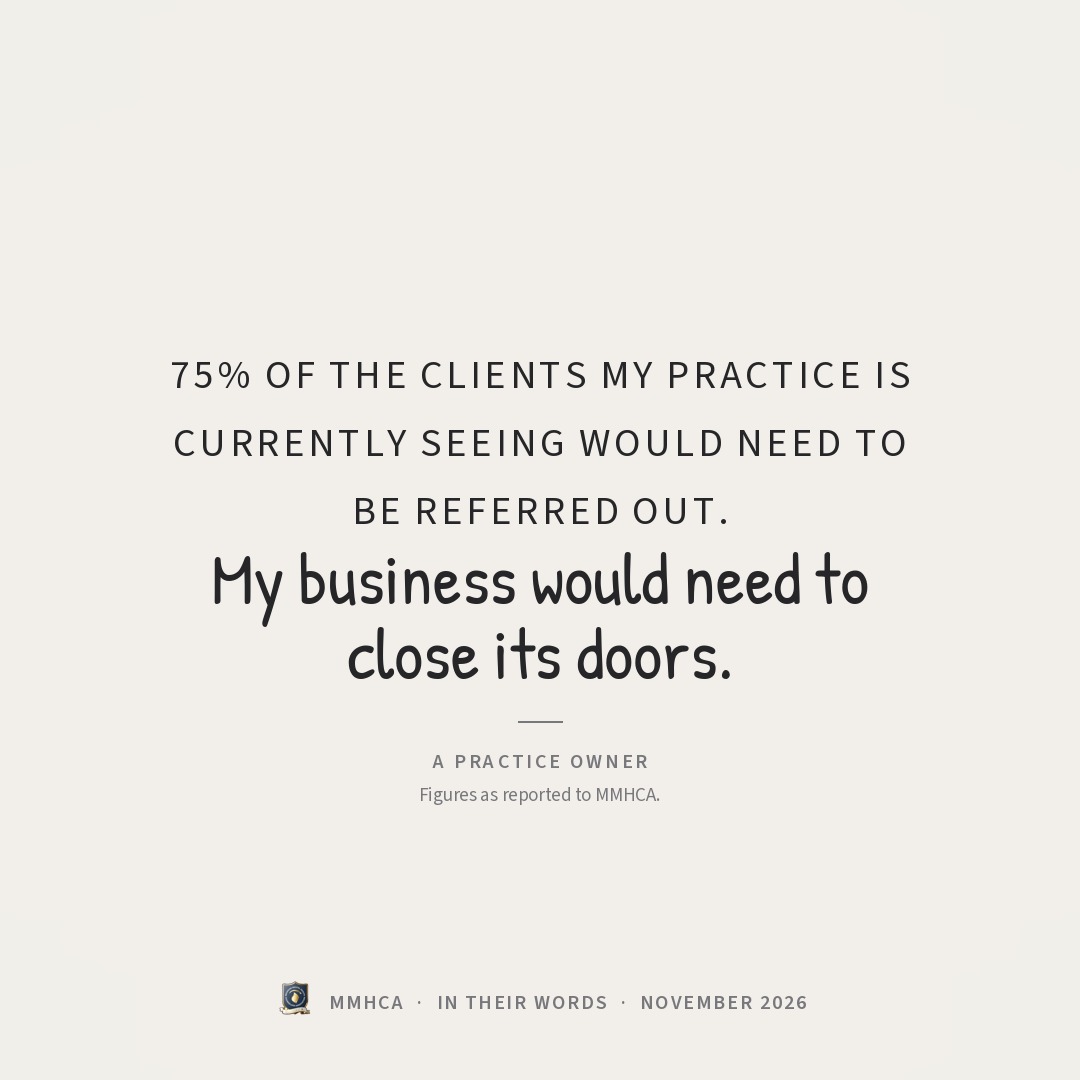
Every card below is a verbatim, anonymous account from a counselor, practice owner, client or parent who wrote to MMHCA and said we could quote them. Download any card and post it from your own account.
Get the cards
Each card is a 1080 by 1080 image that fits Facebook, Instagram, LinkedIn, X, Threads and text messages. Save one, save a few, or take the whole set.
Download all 42 cards (ZIP, 3.4 MB) Pick individual cards below
Cards 1 to 12 and 23 to 42 come from the anonymous accounts MMHCA began collecting on November 20, 2026. Cards 13 to 22 come from the July 2026 statewide impact assessment of 2,769 Michiganders. Where a card reports a number, it is the number the respondent gave us; we have not audited it, and each such card says so. Nothing has been edited except cuts, marked with an ellipsis. No names, towns or practice names appear anywhere.
How to share them so they land, and so no one gets hurt
These are real people’s words about their own lives and practices. They carry weight because they are true, specific and first-person. The same things that make them powerful are what keep everyone safe when they travel. A few rules.
Do
- Post from your own account, in your own voice. One line of your own on top is plenty: why this one stopped you, or who you want to see it.
- Tag public officials at their official accounts: your state representative and state senator, the Governor, and the Michigan Department of Insurance and Financial Services (DIFS), which regulates Blue Cross. Find your legislators at house.mi.gov and senate.michigan.gov.
- Reply with a card on Blue Cross Blue Shield of Michigan’s own public posts if you are a member or a network provider. You are a customer or a contractor telling a company what its policy is doing. Keep it to the card and a civil sentence.
- Send a card to your clients’ HR or benefits office if you are a practice owner, and to your own employer’s benefits office if you are insured through work. Employers choose plans.
- Keep the card as it is. The footer that says MMHCA and the attribution line are what let anyone trace it back to a documented, consented source.
- Add your own account at the form, so there are more cards next week.
Don’t
- Don’t add a name, town, practice or employer to any card, or guess at one in a comment. The people who wrote these agreed to be quoted anonymously, and that is the deal.
- Don’t tag or message individual Blue Cross employees, executives or their families. Tag the company and the regulators, not people.
- Don’t add claims of your own about Blue Cross’s motives, finances or intentions. Say what the policy does, point to the documents, and let the cards speak. What is on the cards is one person’s experience and opinion; what you add becomes yours.
- Don’t alter the text, crop out the footer, or put the words on a different image. If a card is too long for a platform, pick a shorter one.
- Don’t present a card as your own story unless it is. If it is, say so.
- Don’t flood. One good card in the right place beats twenty in the wrong one. Platforms treat mass identical comments as spam and remove them.
MMHCA is not a law firm. The guidance above is common sense about honest speech, not legal advice. Truthful first-person accounts about your own experience, shared with attribution and without invented facts about other people, are the kind of speech that stays out of trouble. If your situation is unusual, ask a lawyer.
Three captions you can use or change
Use your own words if you have them. If you want a starting point:
This is one of 42 anonymous accounts Michigan counselors, practice owners and clients sent to @MMHCA about the Blue Cross incident-to change. It takes effect March 1, 2027. I am sharing it because it could be my practice. The rest are at mmhcanow.org/in-their-words.
On March 1, 2027, Blue Cross Blue Shield of Michigan ends incident-to billing for limited licensed clinicians in private practice settings. Here is what one Michigan client says that will cost them. 2,769 people answered the MMHCA and NASW Michigan survey this summer; this is one voice. If you are a Blue Cross member and this will affect your care, you can file a complaint with DIFS: mmhcanow.org/difs-guide.
[Your state rep], [your state senator]: I am a constituent and a licensed counselor. On March 1, 2027, Blue Cross Blue Shield of Michigan will stop reimbursing care from limited licensed clinicians, who practice under supervision while completing their hours, in private practice settings. This card is what that means for one Michigan practice. I would like to know what you are doing about it. More at mmhcanow.org/bcbsm-impact.
Describe the policy by what Blue Cross’s own documents say it does. The pages at mmhcanow.org/bcbsm-impact and mmhcanow.org/regulatory-guides quote those documents directly.
The cards
Click a card to download the full-size image. Numbers are for reference only; share them in any order.


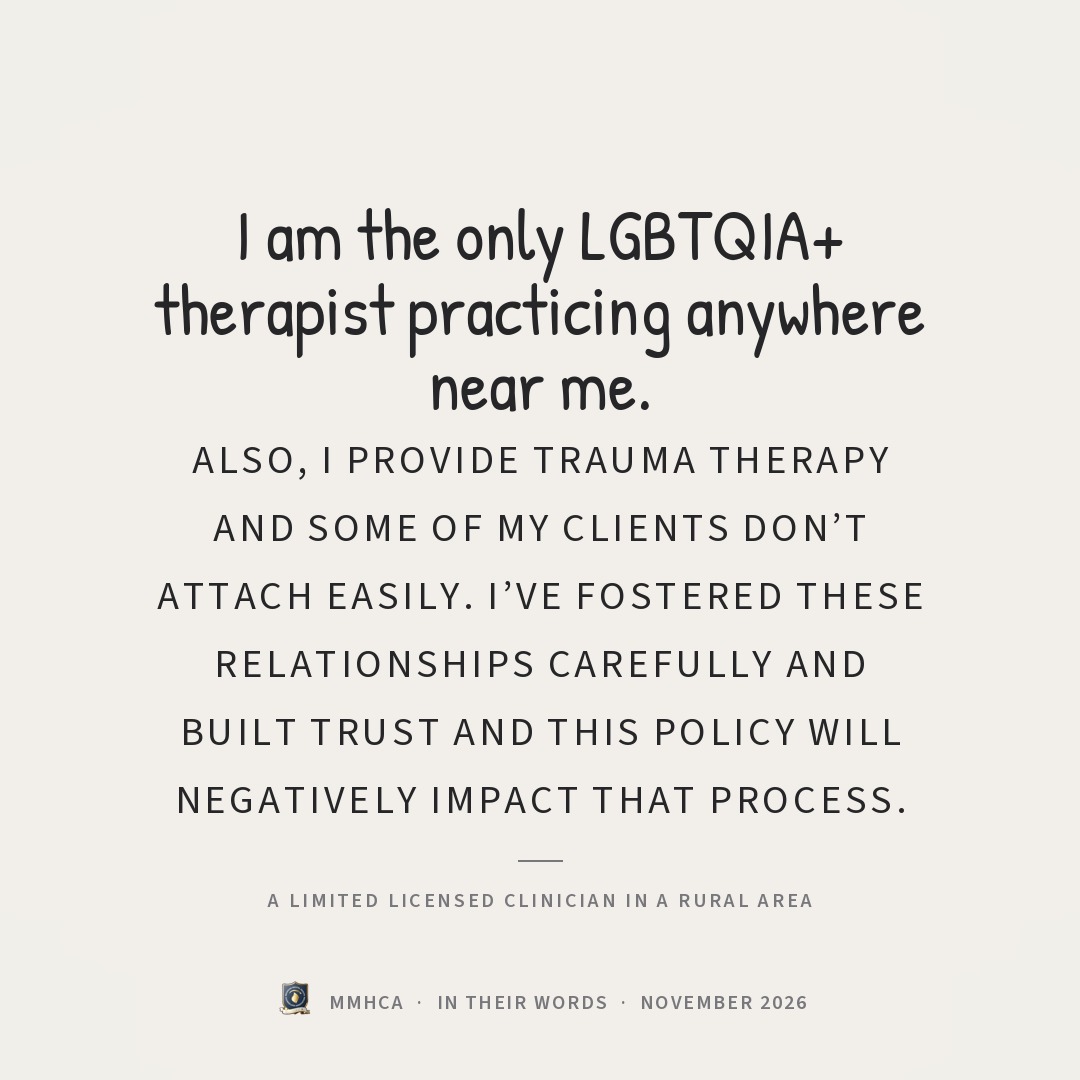
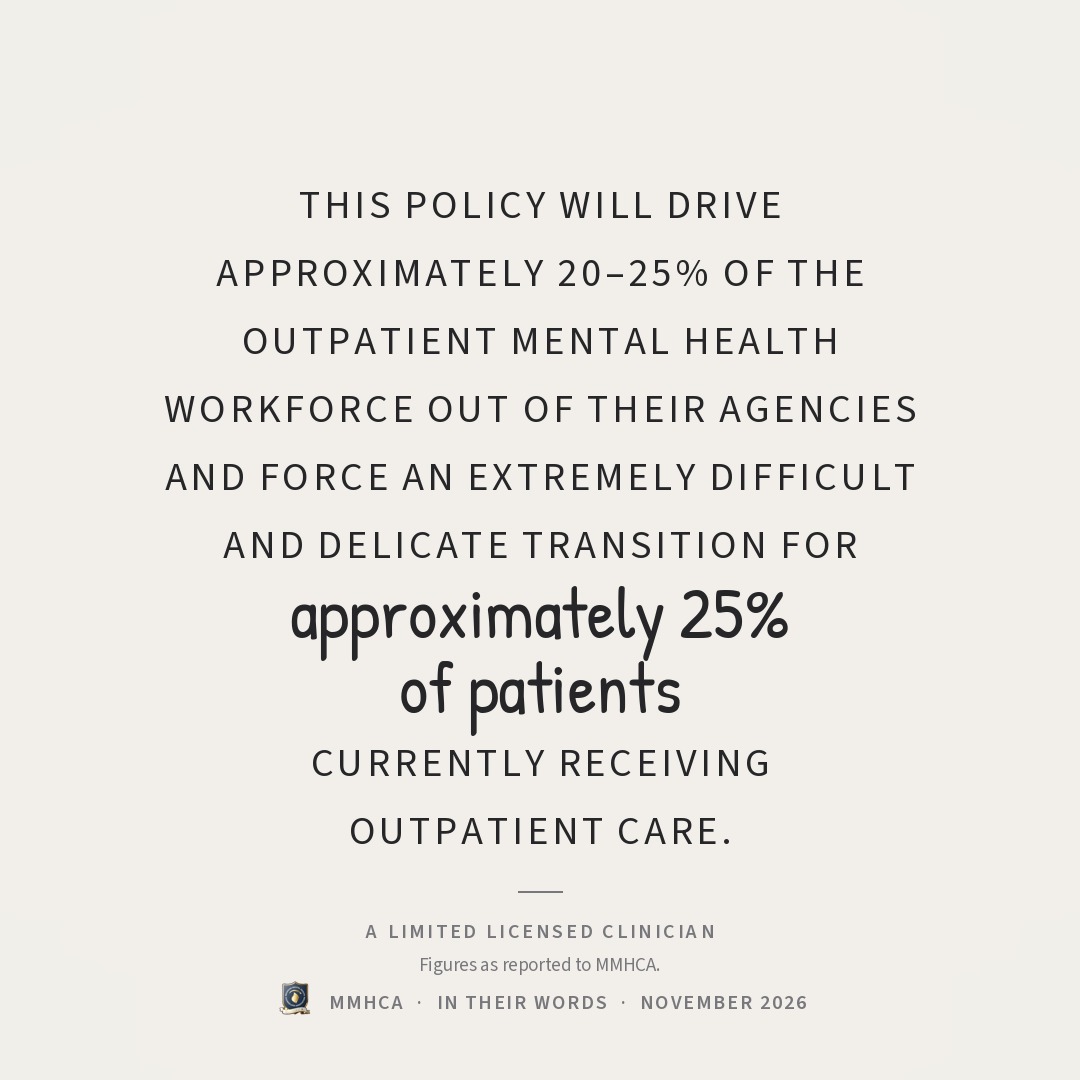
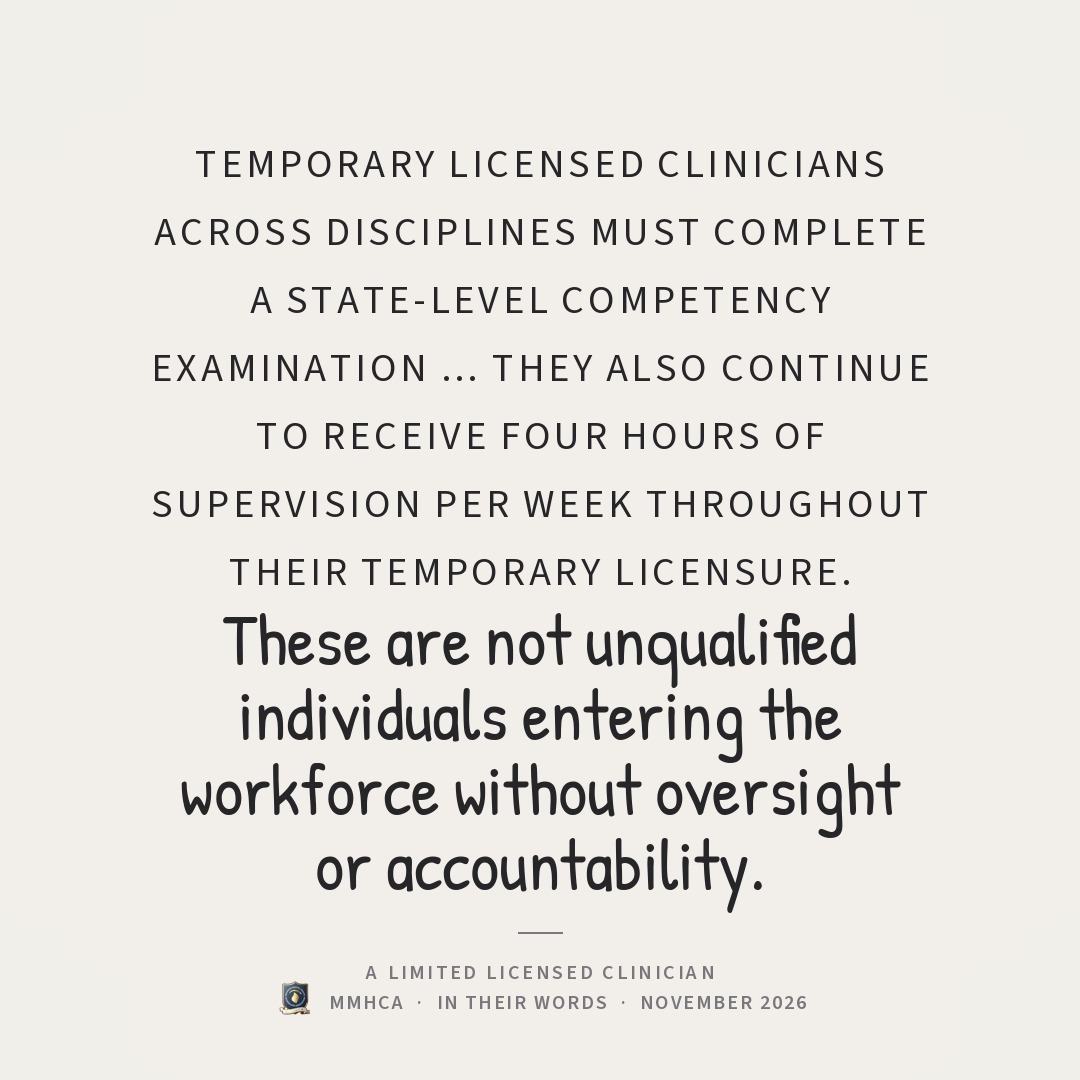
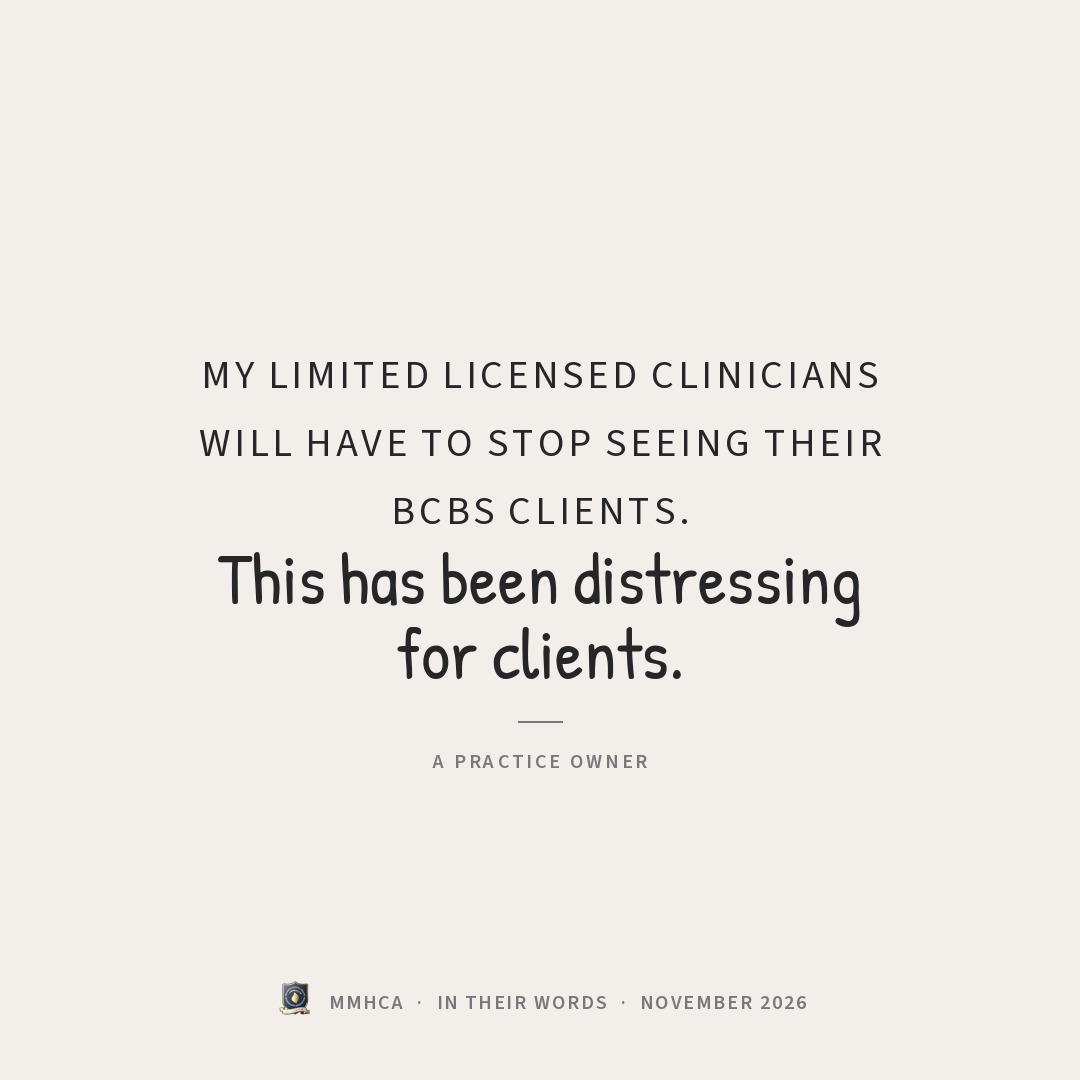
Add your account
The form takes about three minutes and needs no sign-in. No names, no towns, no practice details are printed. Check the box that lets MMHCA quote you anonymously and your words may become the next card. Counselors, social workers, MFTs, psychologists, practice owners, clients and family members are all welcome, member or not. Open the form.
Disclaimer: This document is provided by MMHCA for informational purposes only and does not constitute legal advice. While we have made every effort to ensure its accuracy, readers should consult the official MDHHS guidance or seek appropriate professional advice regarding their specific circumstances.
Sources: anonymous accounts submitted to MMHCA through its online form from August to November 2026, quoted with each respondent’s permission; MMHCA and NASW Michigan statewide impact assessment, July 2026. Prepared by the Michigan Mental Health Counselors Association, November 21, 2026.